Showing posts with label Djambi. Show all posts

Tuesday, May 21, 2013

GELD DJAMBI 1947-1948

http://www.papermoney-indonesia.com/djambi-letter-combinations-on-the-yellow-notes/

Djambi – letter combinations on the yellow notes
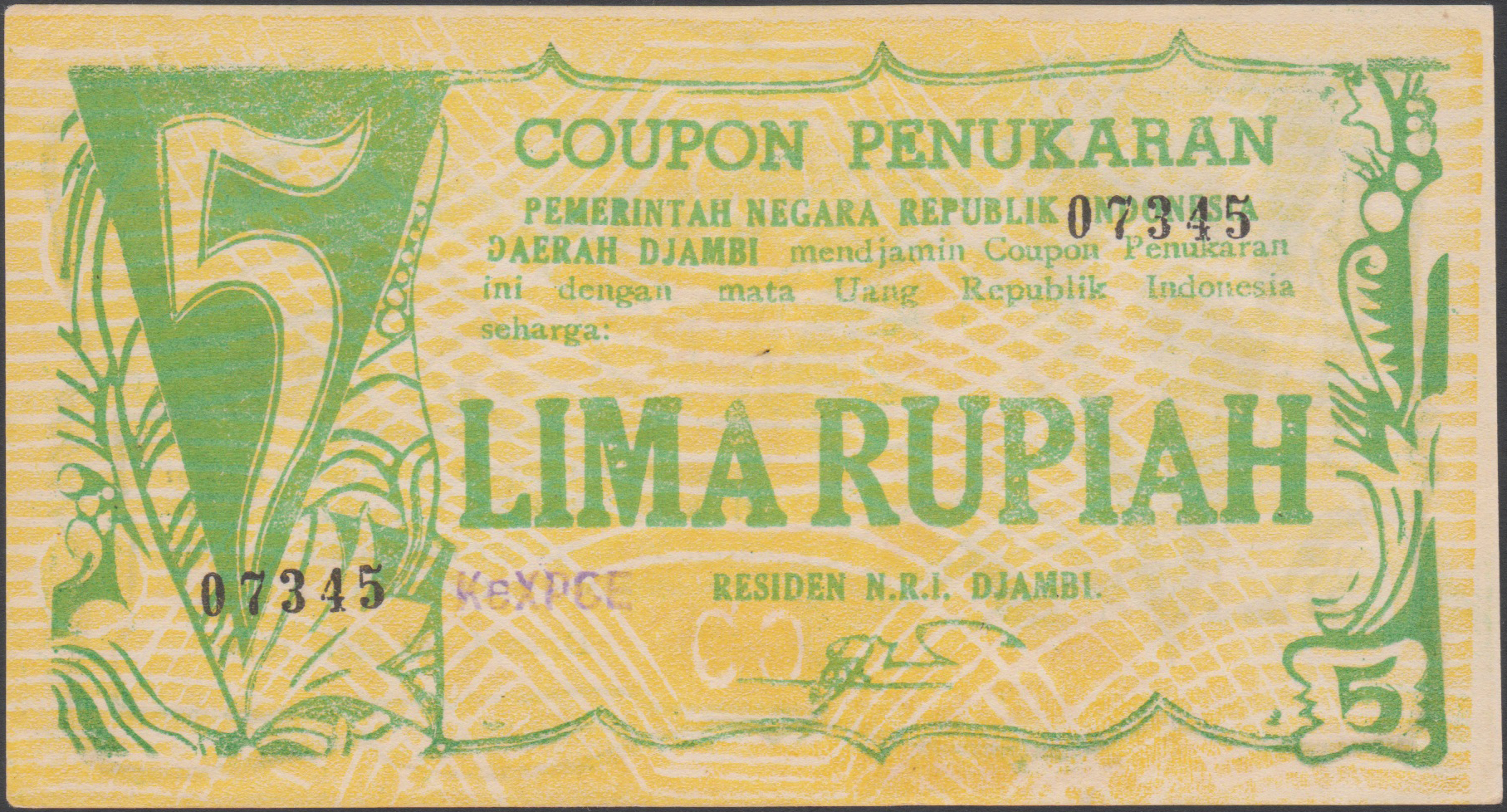
Djambi – The serial letter combinations on the yellow notes issued in 1947 and 1948.
By Rob Huisman and Hans P. van Weeren
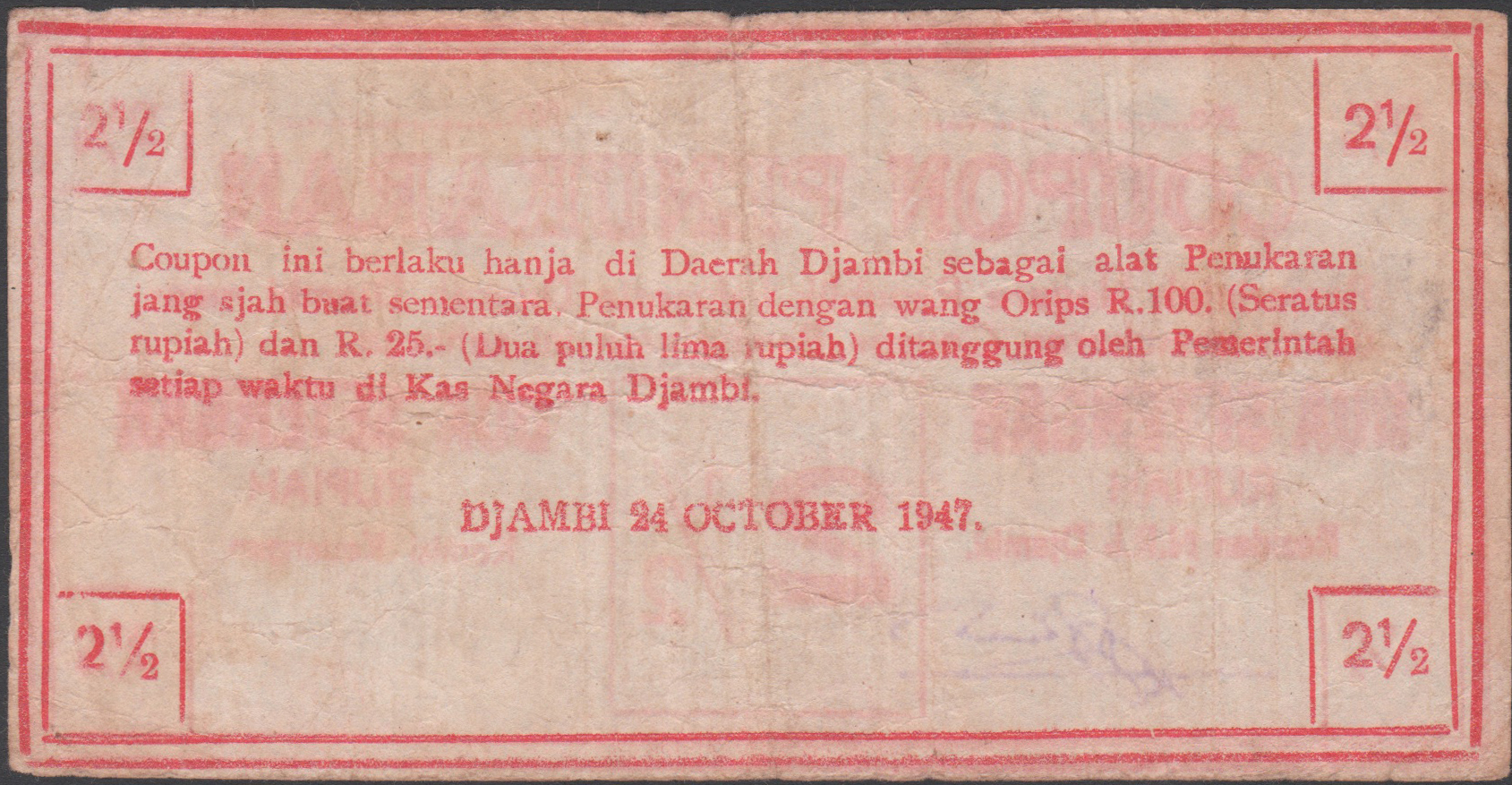
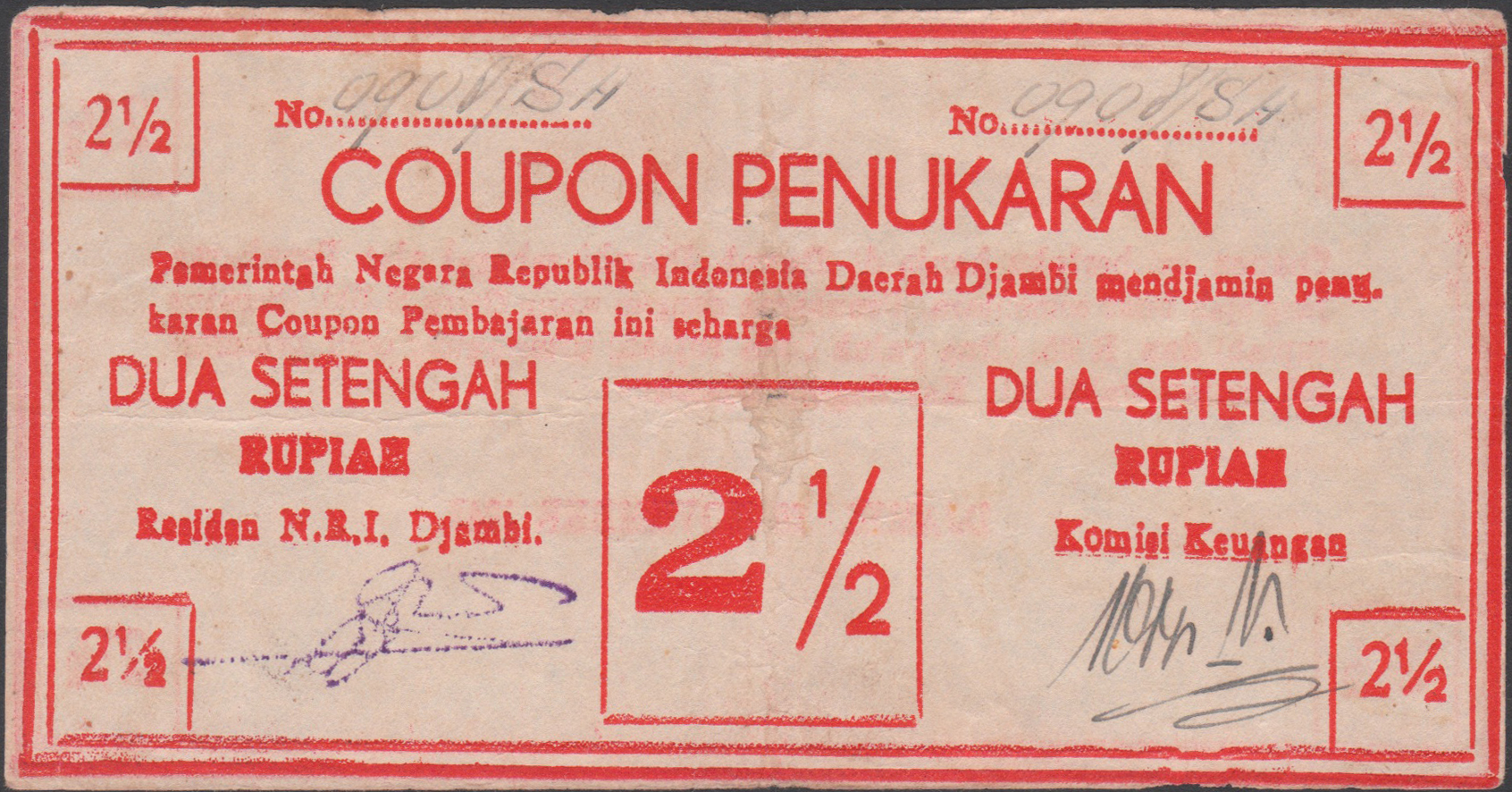
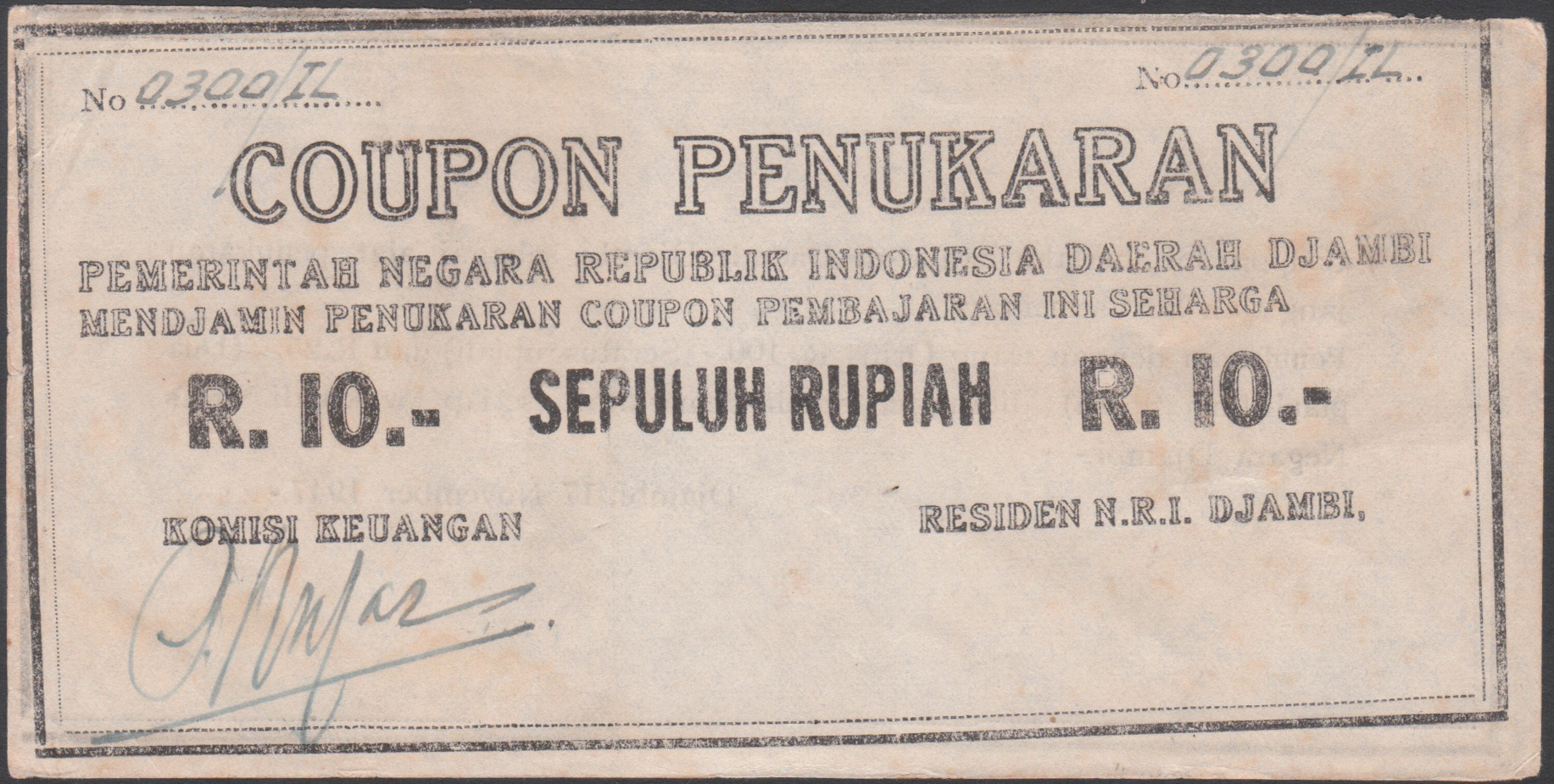
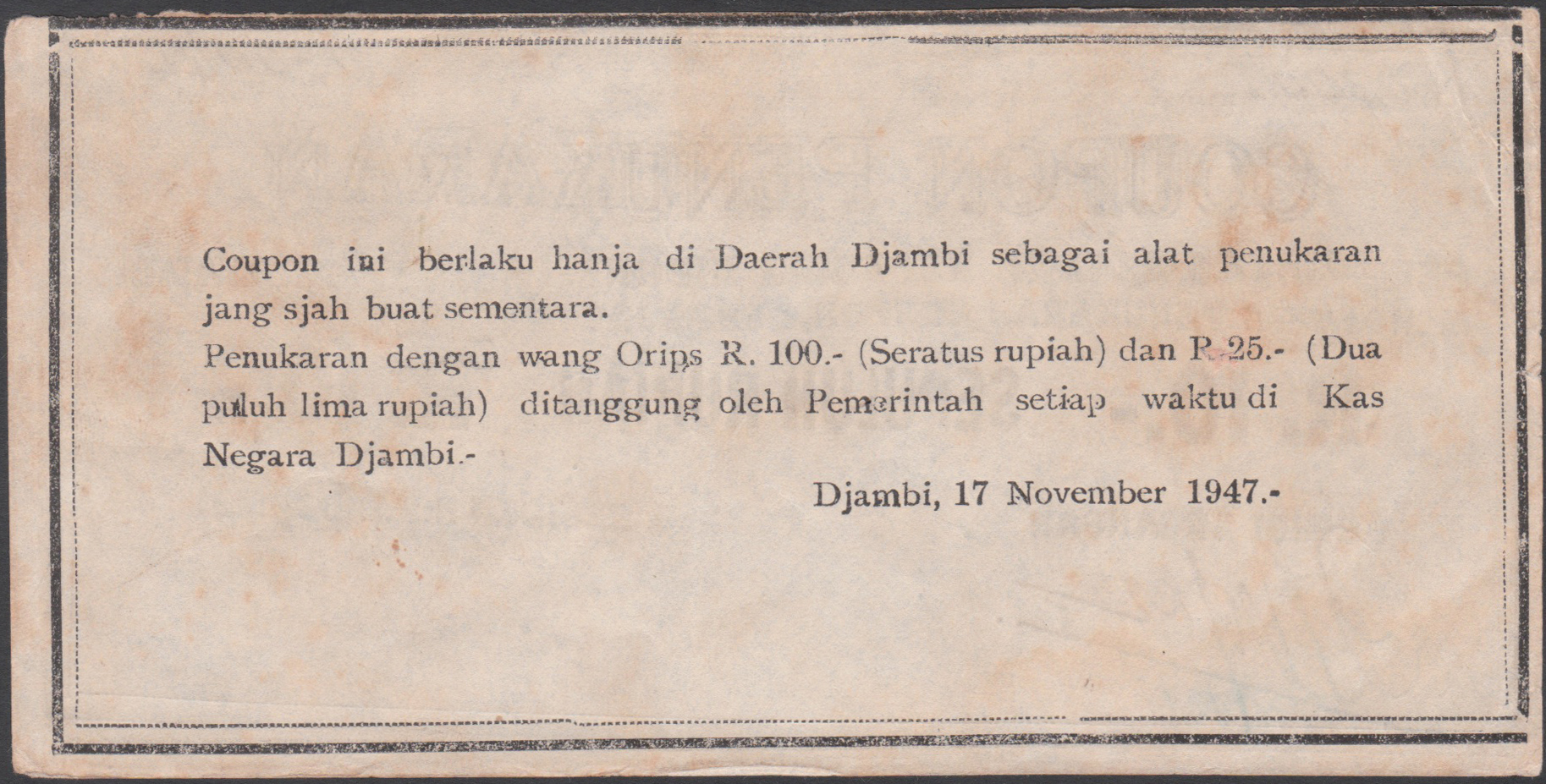
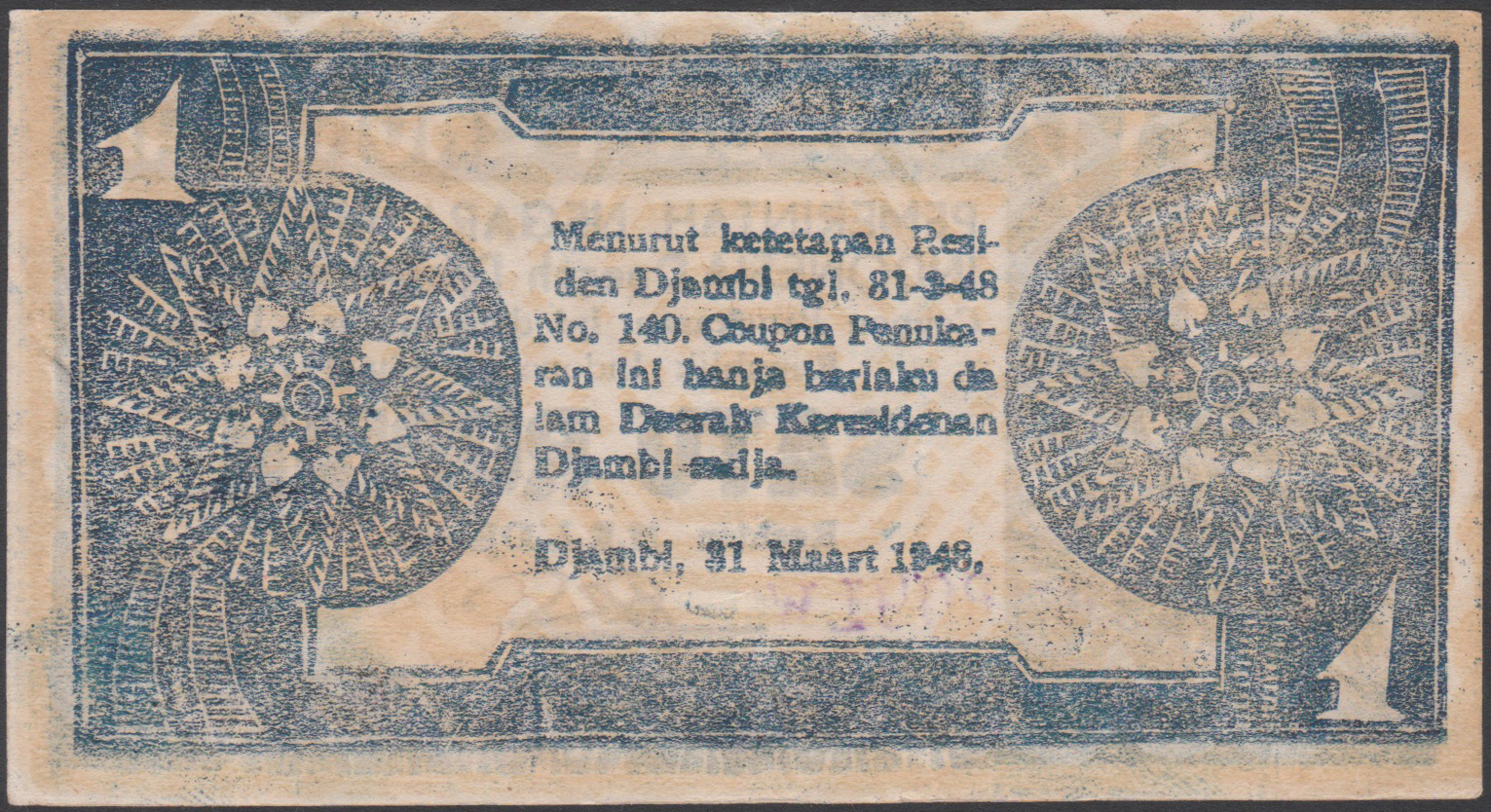
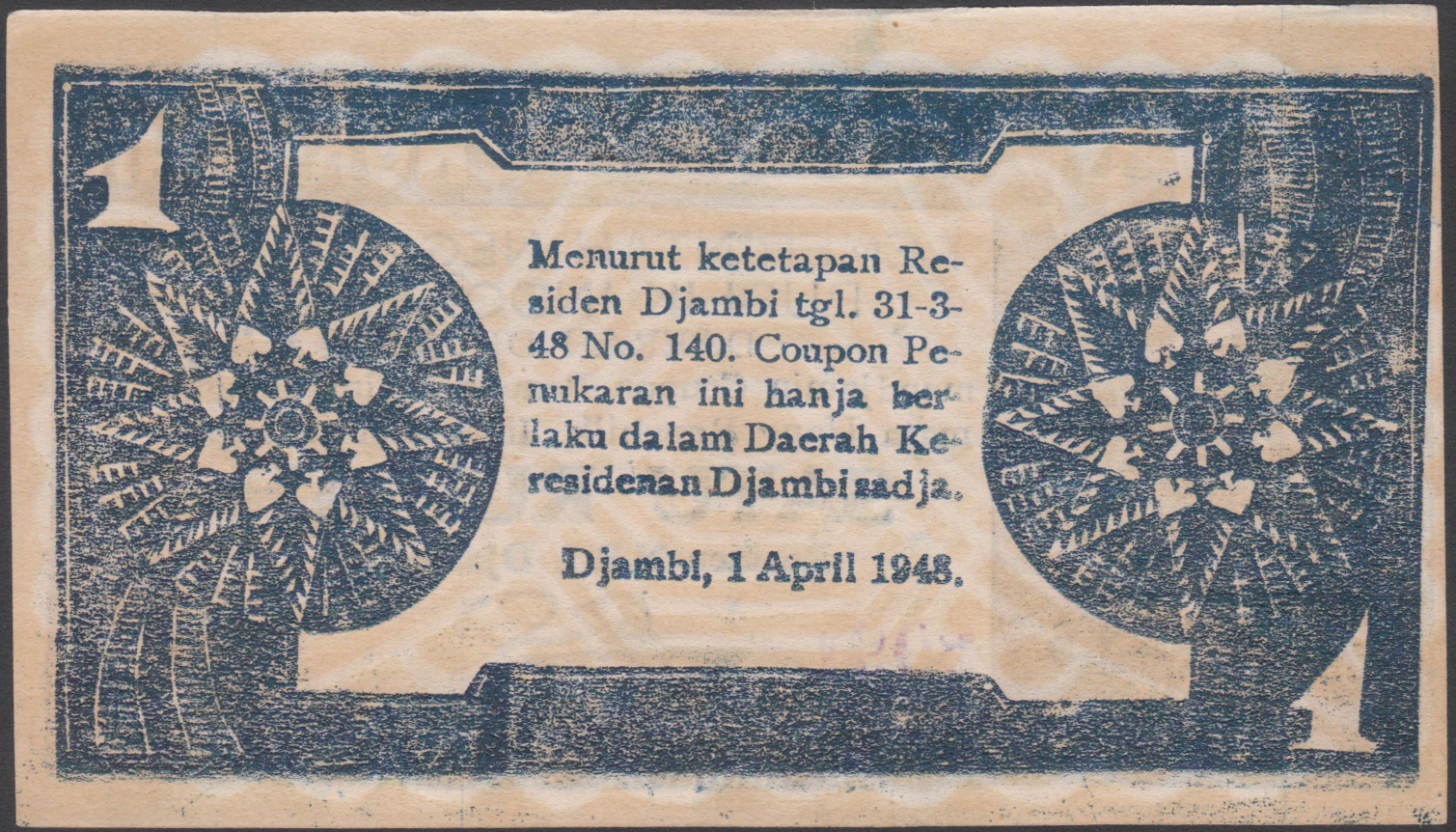
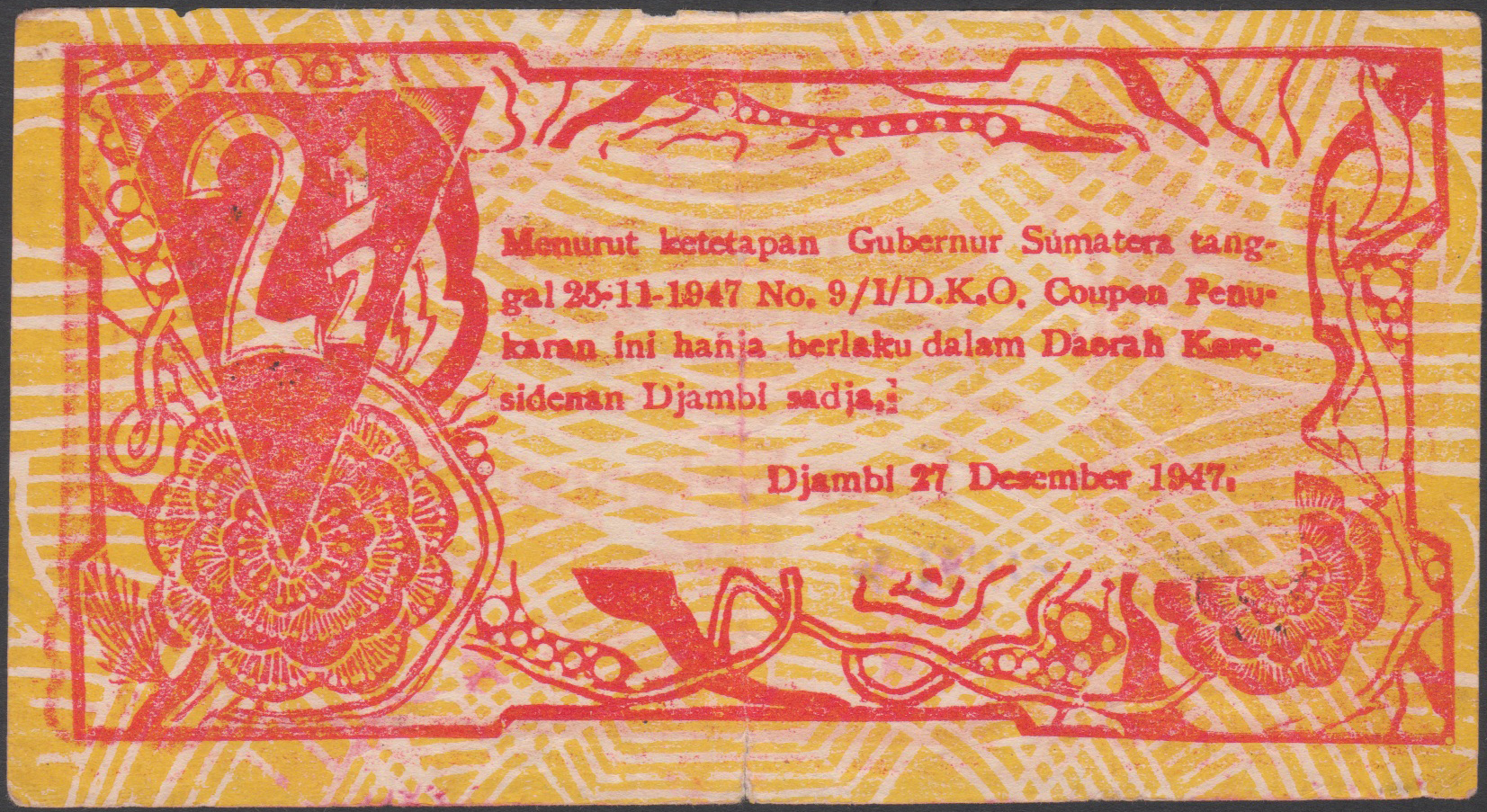
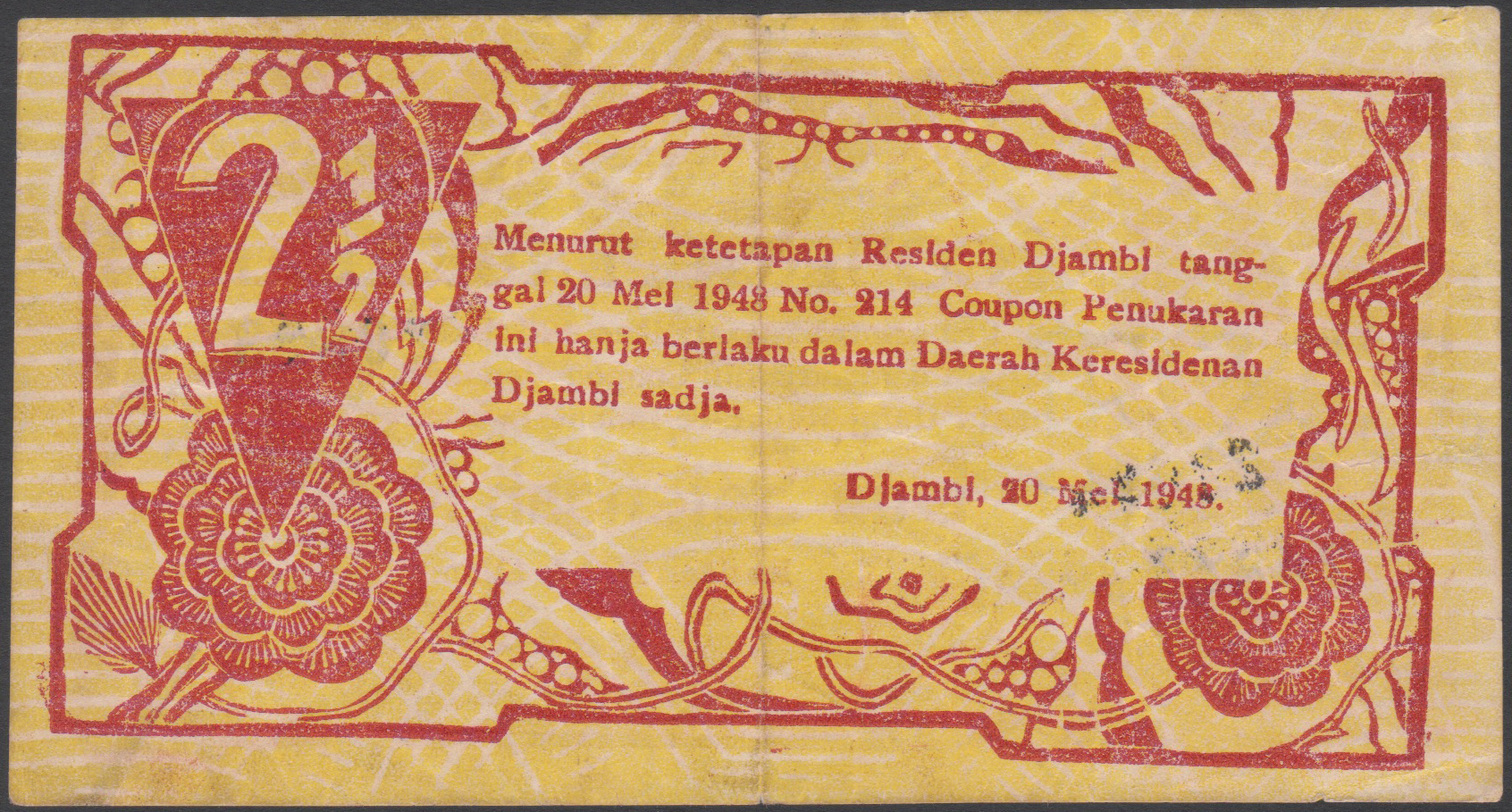
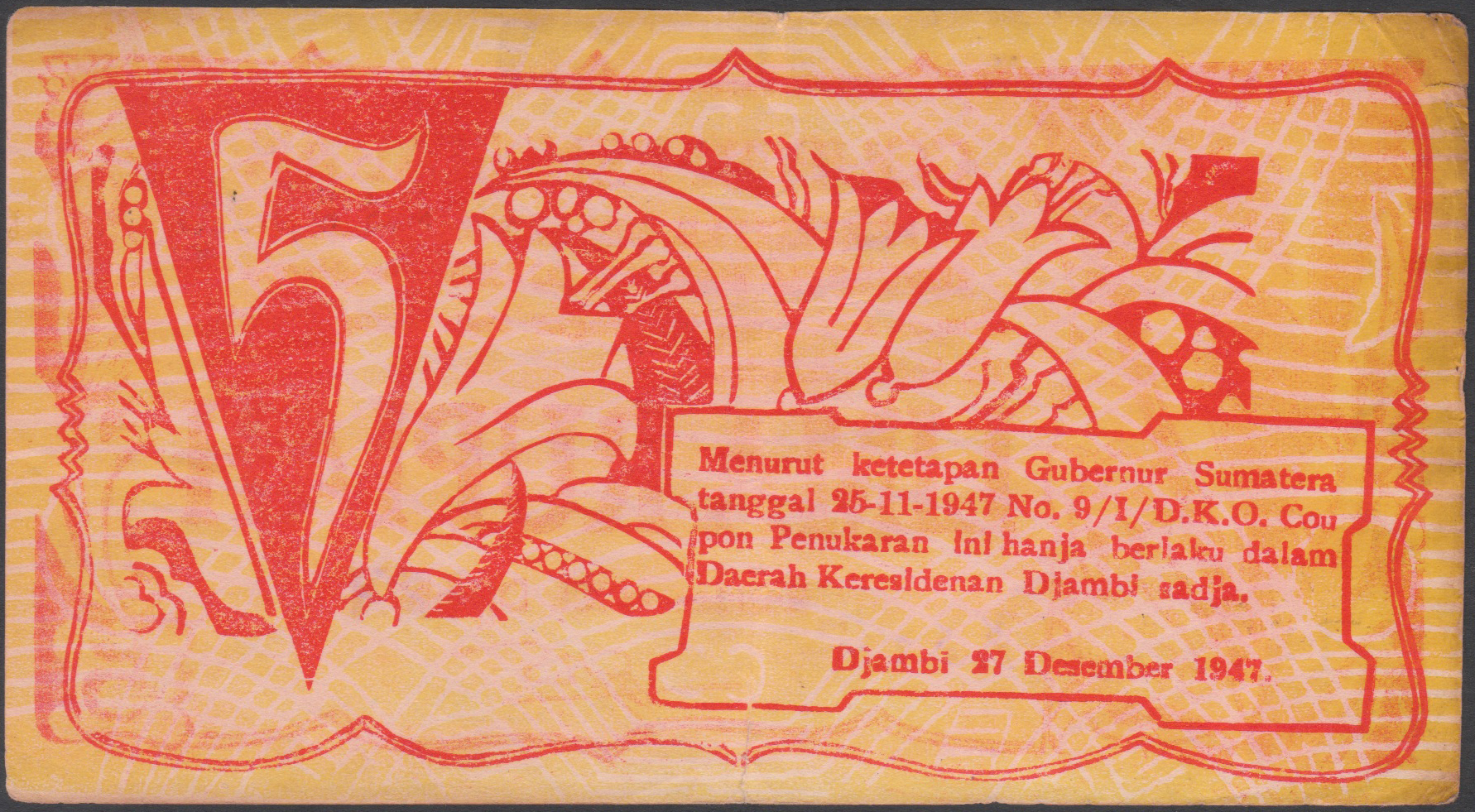
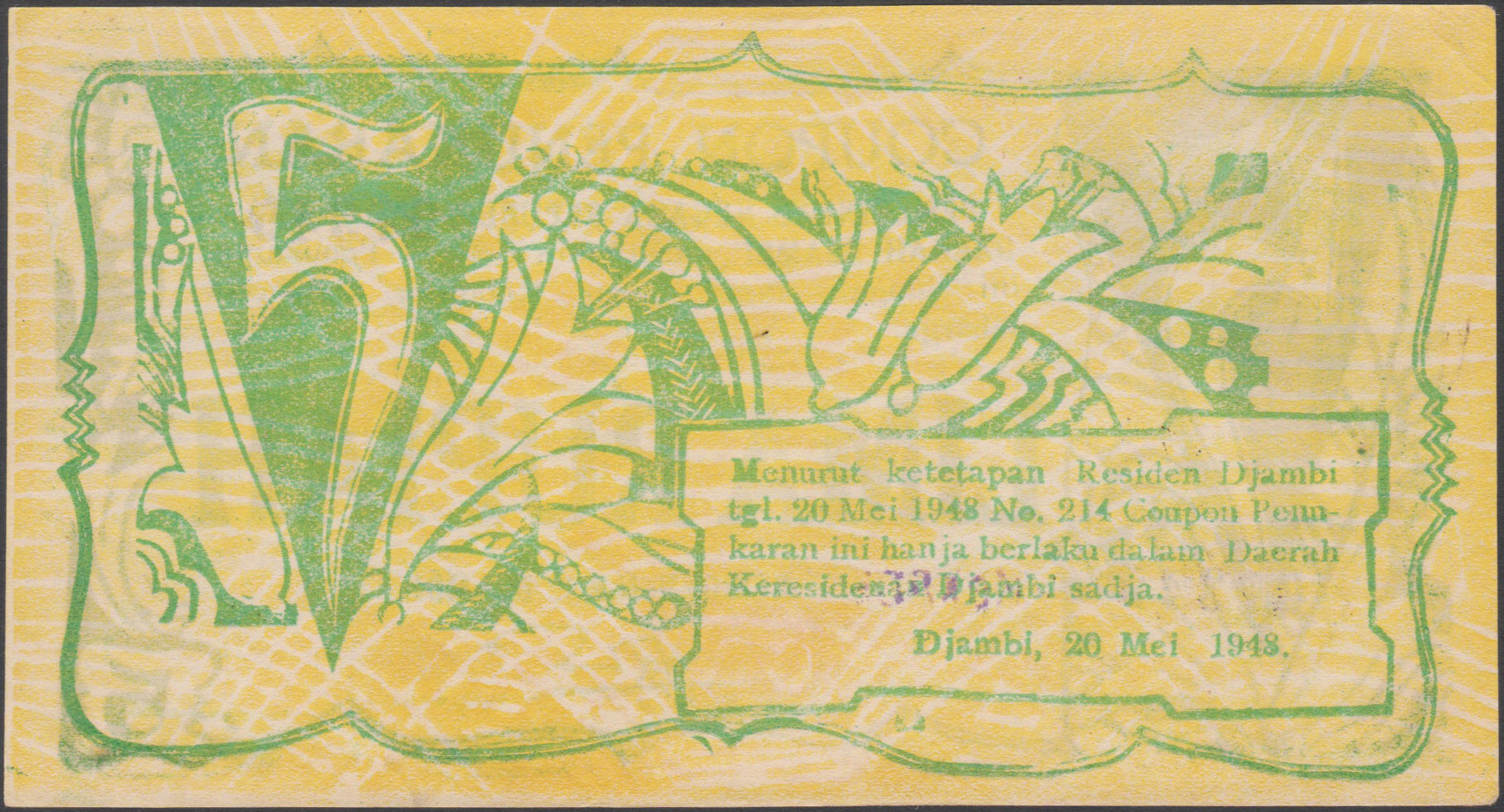
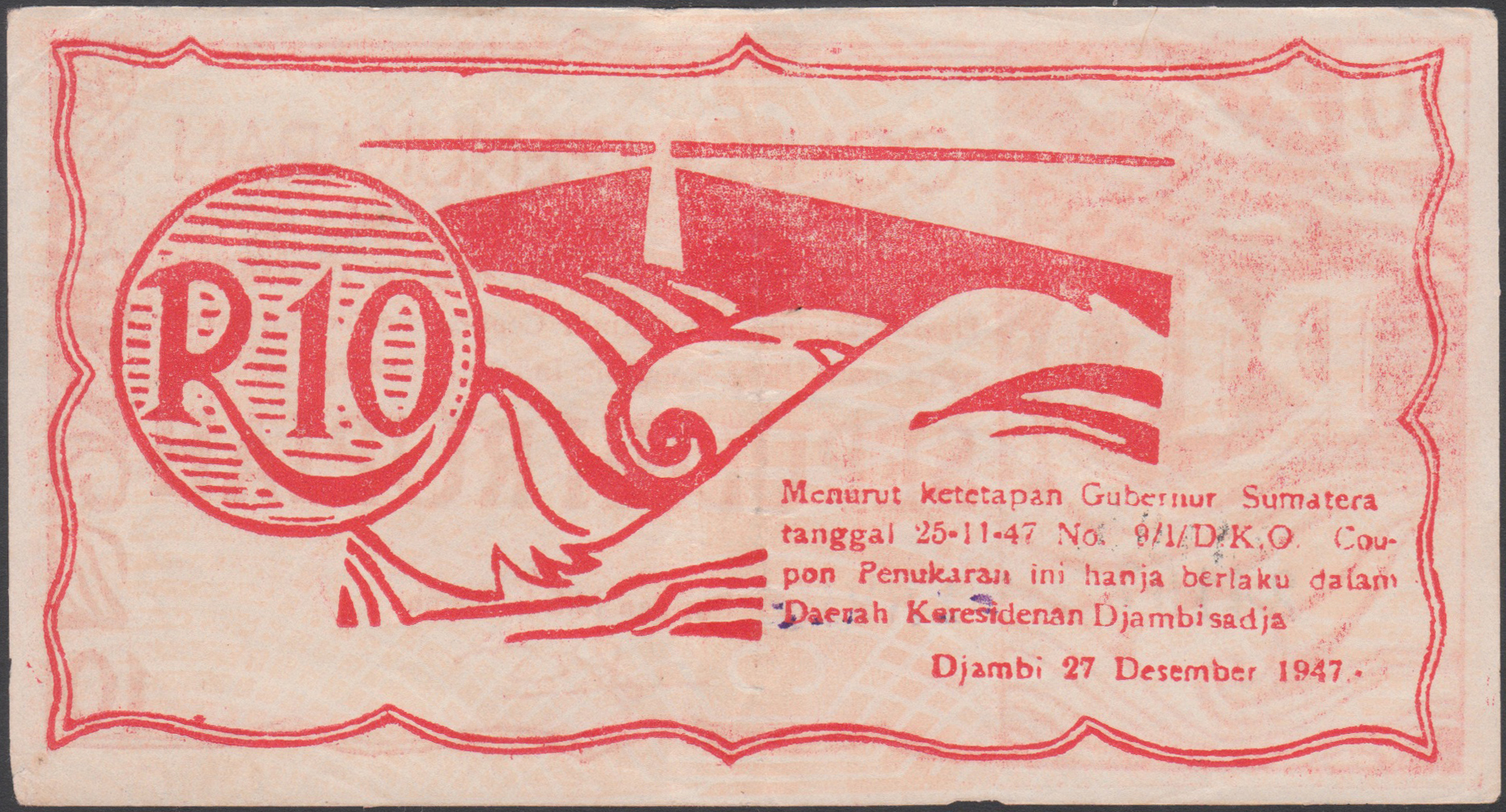
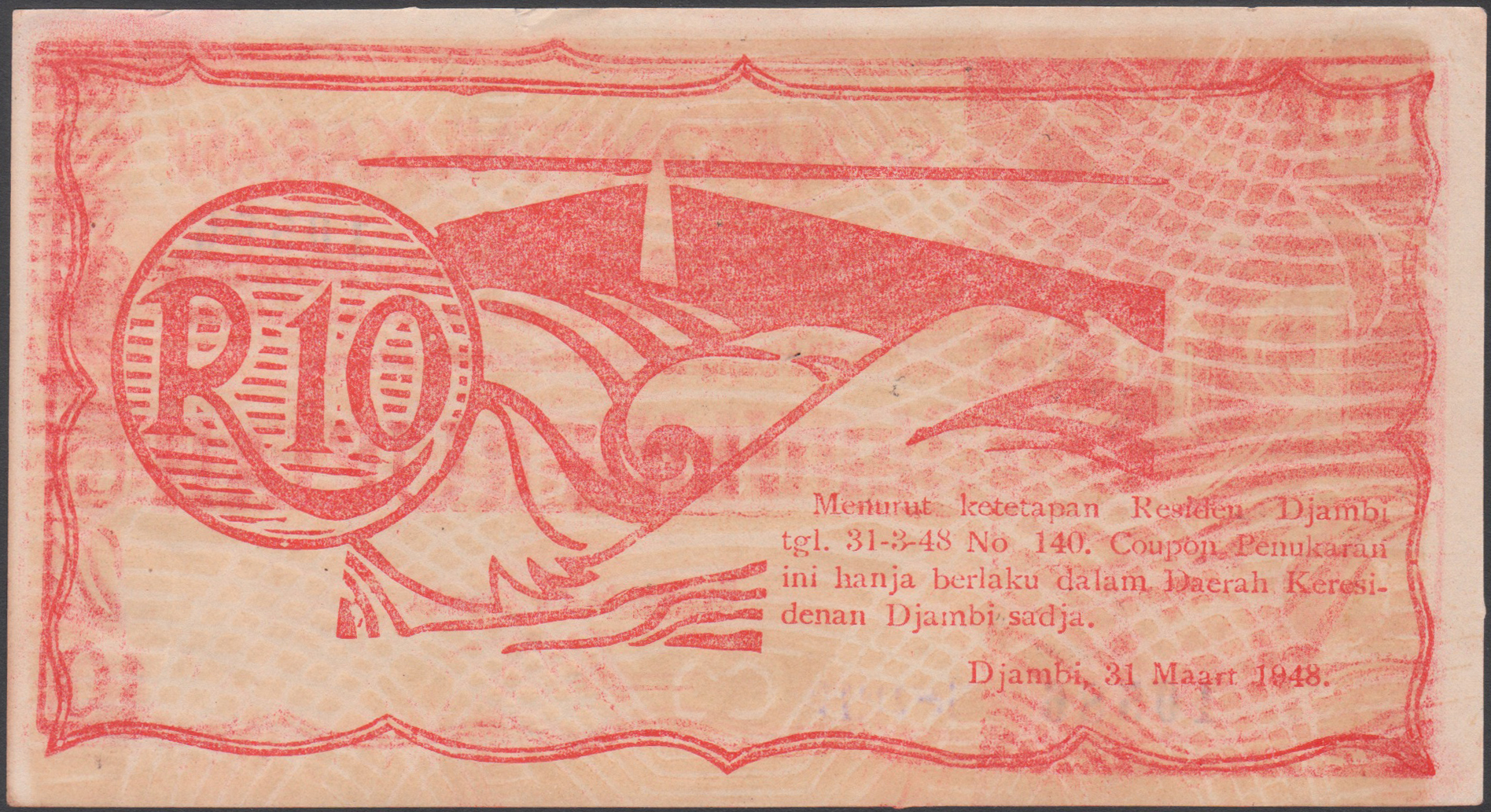
From 27 December 1947 to 20 May 1948, emergency paper money was issued in the Djambi residence by the Indonesian republican authority. All notes carry the description “Coupon Penukaran” (exchange note), indicating the temporary character of the emergency notes.
After the first Dutch ‘police action’, the distribution of centrally issued money (initially printed in Pematang Siantar and later in Bukittinggi) had become difficult and money scarcity occurred locally. As a result, the Indonesian republican authority issued emergency money in Sumatra on a large scale after the middle of 1947.
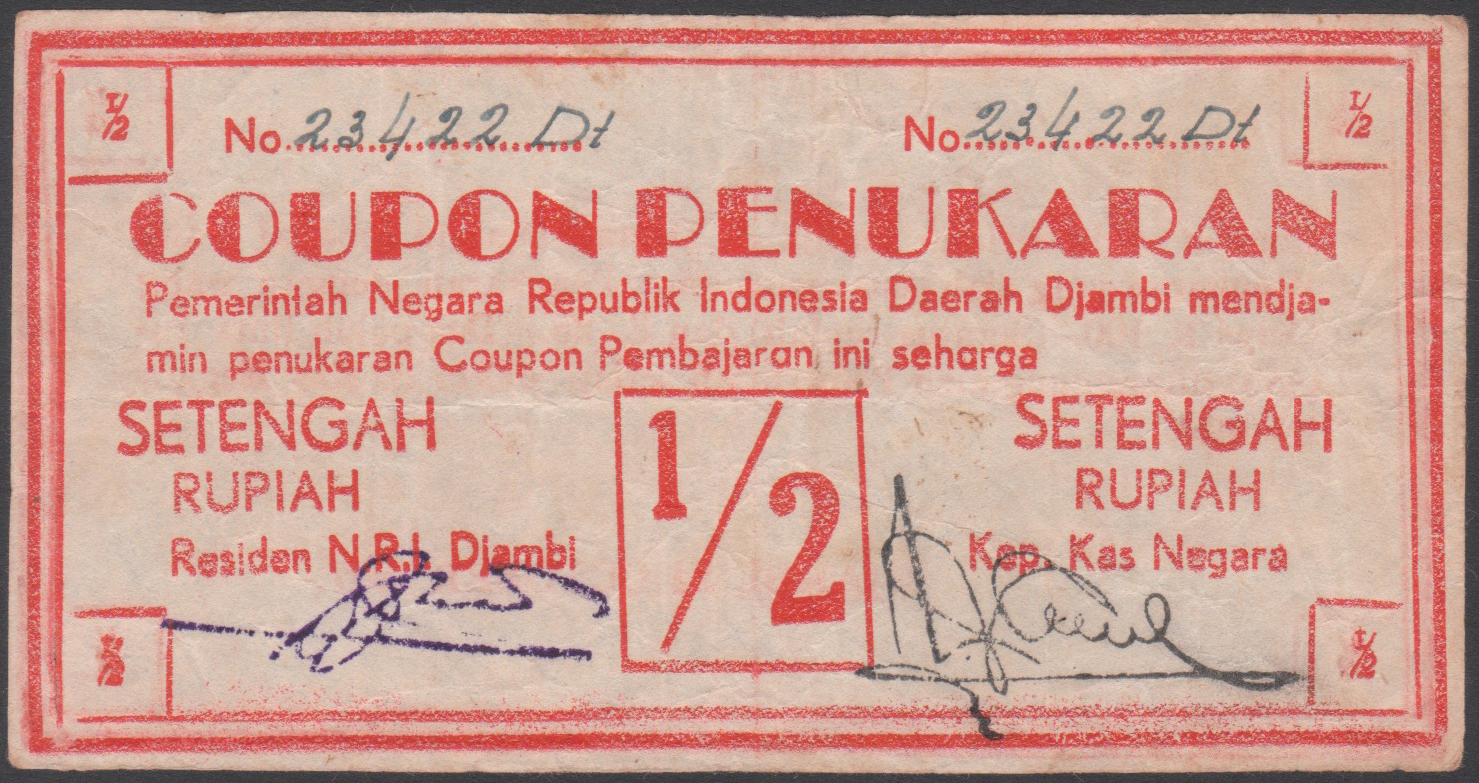
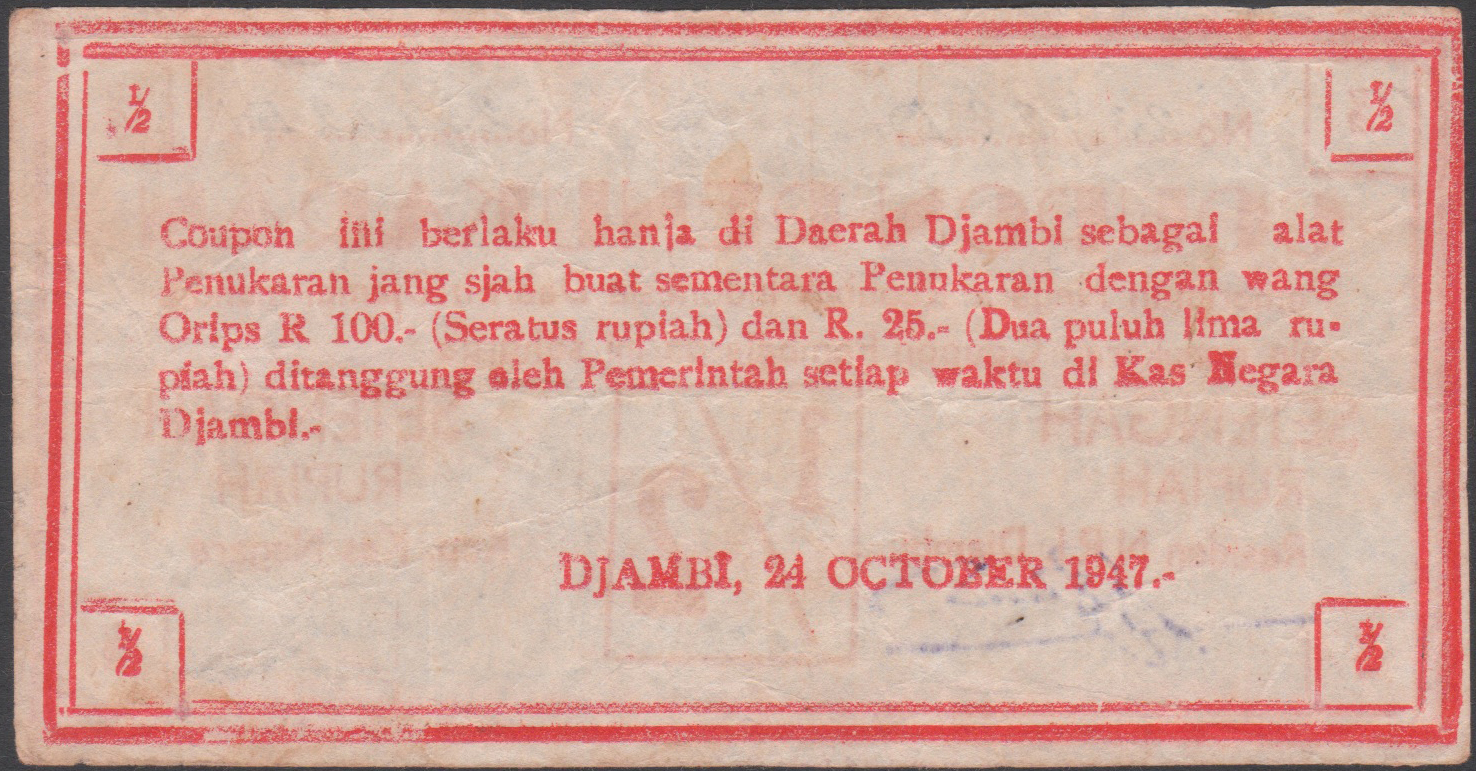
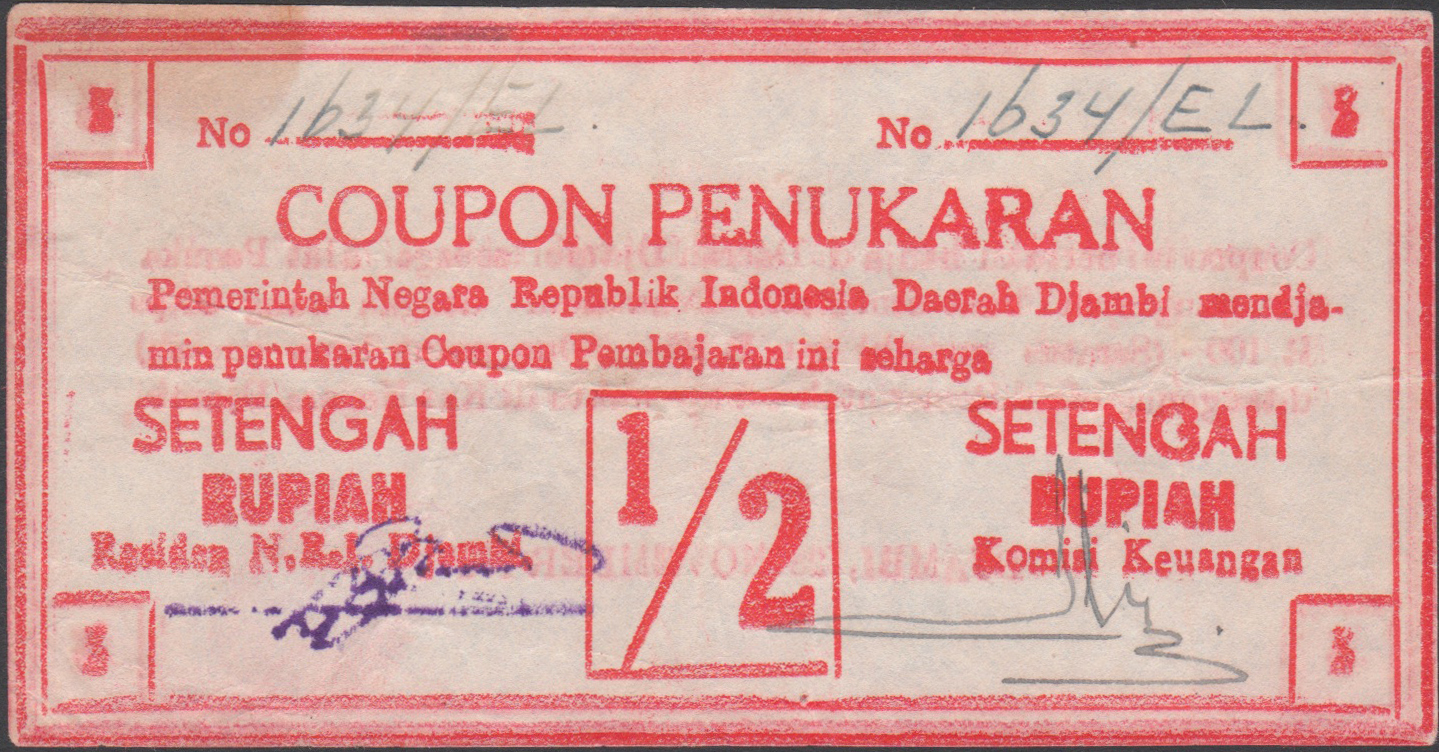
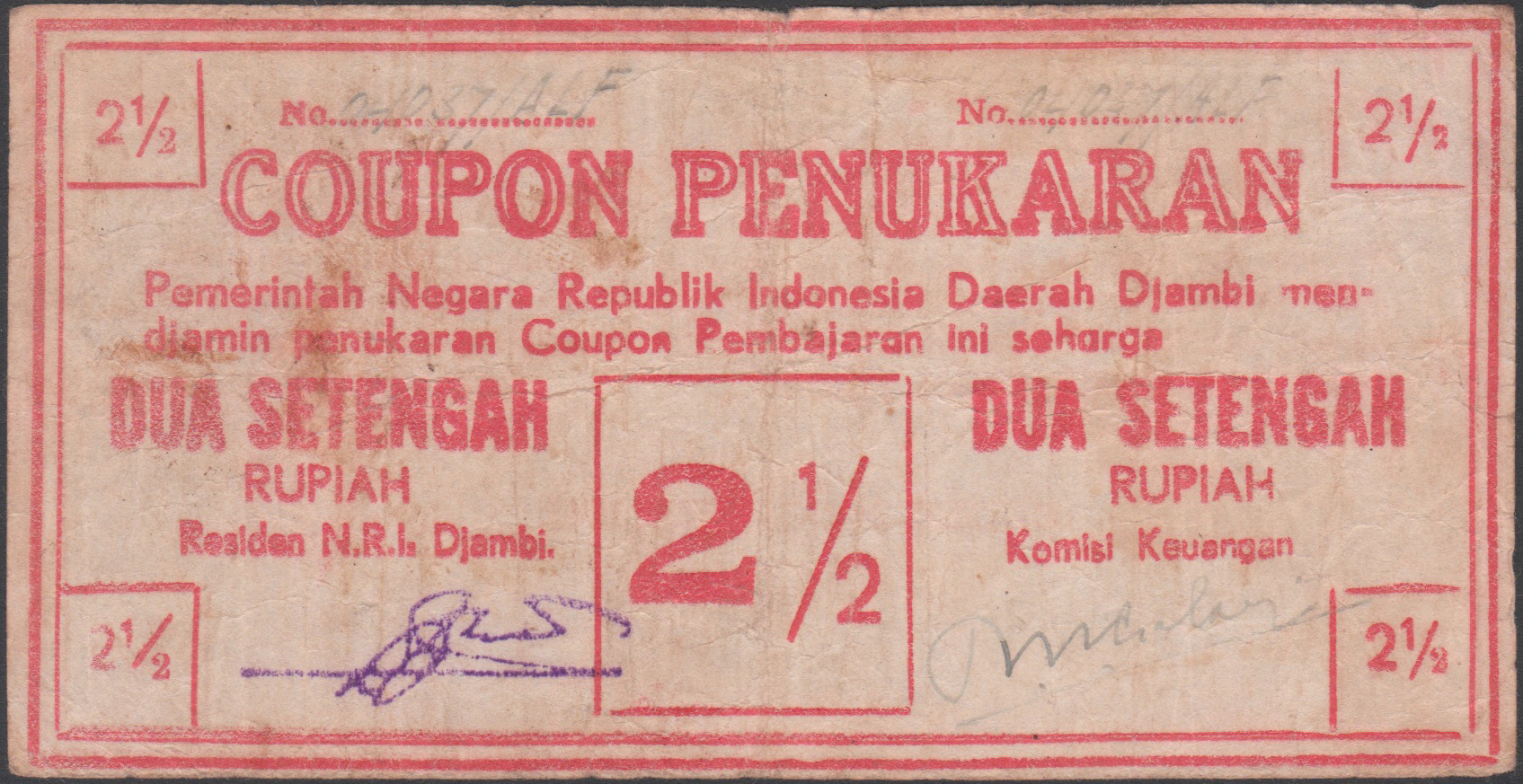
During the period September to November 1947 a first series of paper money was issued on white paper with manual and stamped signatures. The following emissions are known:
1 rupiah, 17 September 1947  (H-564)
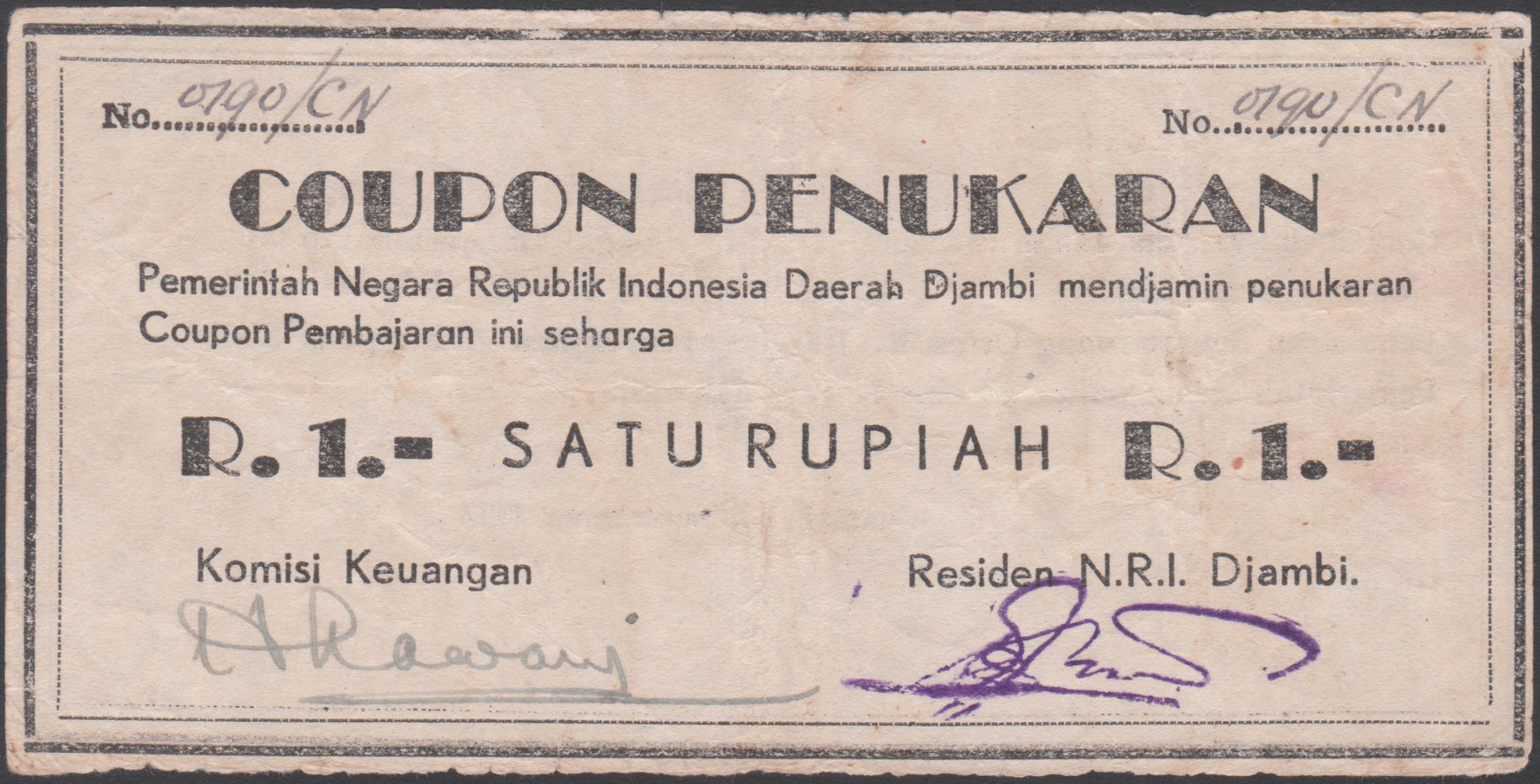
½ rupiah, 24 October 1947 (H-565)
½ rupiah, 28 November 1947 (H-567)
2 ½ rupiah, 24 October 1947 (H-566)
2 ½ rupiah, 28 November 1947 (H-568)
5 rupiah, 17 November 1947 (H-569)
10 rupiah, 17 November 1947 (H-570)
These notes show a large variety of signatures and serial numbers.
A second series of notes was issued during the period December 1947 and May 1948, printed on paper with a yellow background color. The design of these notes is less primitive than the first series.  The only one signature – of the republican resident – is now printed.
A striking feature of this second series is the consequent use of five or six stamped serial letters. The system used has been unclear for a long time. In 1998, Adi Pratomo (Rupiah The Journal, No. 5, September 1998, pages 35 and 36) discovered that a limited number of combinations were used:
Notes with 5 letters:
ANZMY    NAMZZ
BOYLW     OBLYX
CPXKU      PCKXV
DQWJS      QDJWT
ERVIQ        REIVR
FSUHO      SFHUP
GTTGM     TGGTN
HUSFK      UHFSL
IVREI         VIERJ
JWQDG     WJDQH
KXPCE      XKCPF
LYOBC      YLBOD
MZNAA   ZMANB
Notes with 6 letters:
AbNZMY    NoAMZZ
BcOYLW    OpBLYX
CdPXKU     PqCKXV
DeQWJS    QrDJWT
EfRVIQ       RsEIVR
FgSUHO     StFHUP
GhTTGM    TuGGTN
HiUSFK      UvHFSL
IjVREI         VwIERJ
JkWQDG    WxJDQH
KlXPCE (1) XyKCPF
LmYOBC    YzLBOD
MnZNAA   ZaMANB
1 KlXPCE is not observed, however KeXPCE is known. Possibly the letter ‘e’ is used to avoid confusion between the letter ‘l’ or the number ‘1’.
Obviously a number of alphabets were used in different sequences. Maybe individual letters from a stamp box were used. It is possible that the combinations were applied as a security measure. It is a fact that notes with letter combinations outside the array always appear to be fakes when examined closer.
When observing the letter combinations of a large number of yellow Djambi notes, it becomes clear that – apart from the above mentioned – the letter combinations seamlessly continue from one denomination to the next.
Below is an overview of the know combinations and the likely sequence of the not yet observed combinations. The observed combinations are in black, and the assumed but not yet observed combinations are in red. The not yet clear transition of the serial letters of the 2 ½ rupiah is marked in blue.
Where applicable it is mentioned which combinations occur with numbers printed with a numbering machine having a number height of 5 millimeters or 5 ½ millimeters.
1 rupiah, 31 March 1948 (H-574)
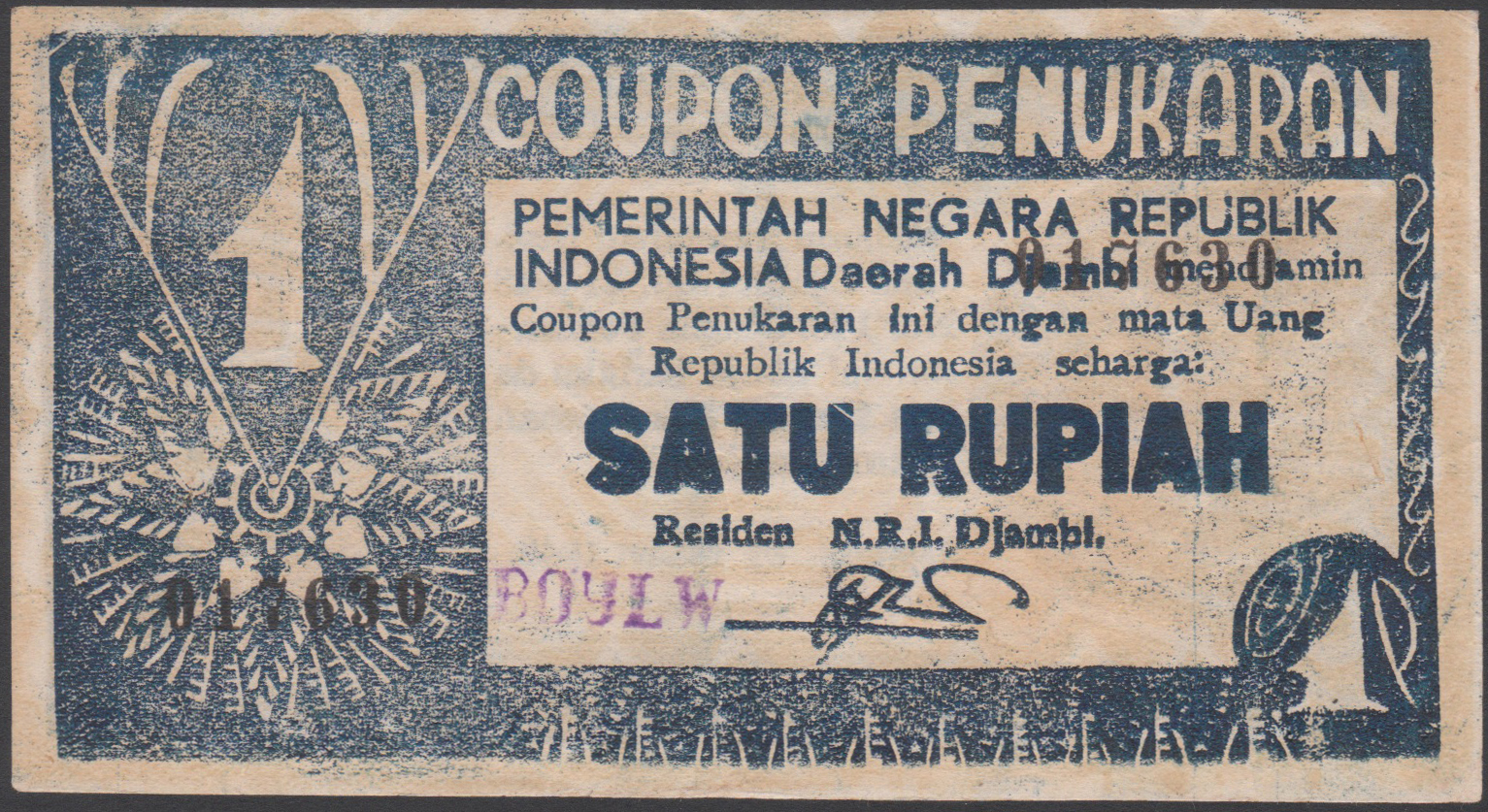
ANZMY
BOYLW (highest observed number 051469)
1 rupiah, 1 April 1948 (H-577)
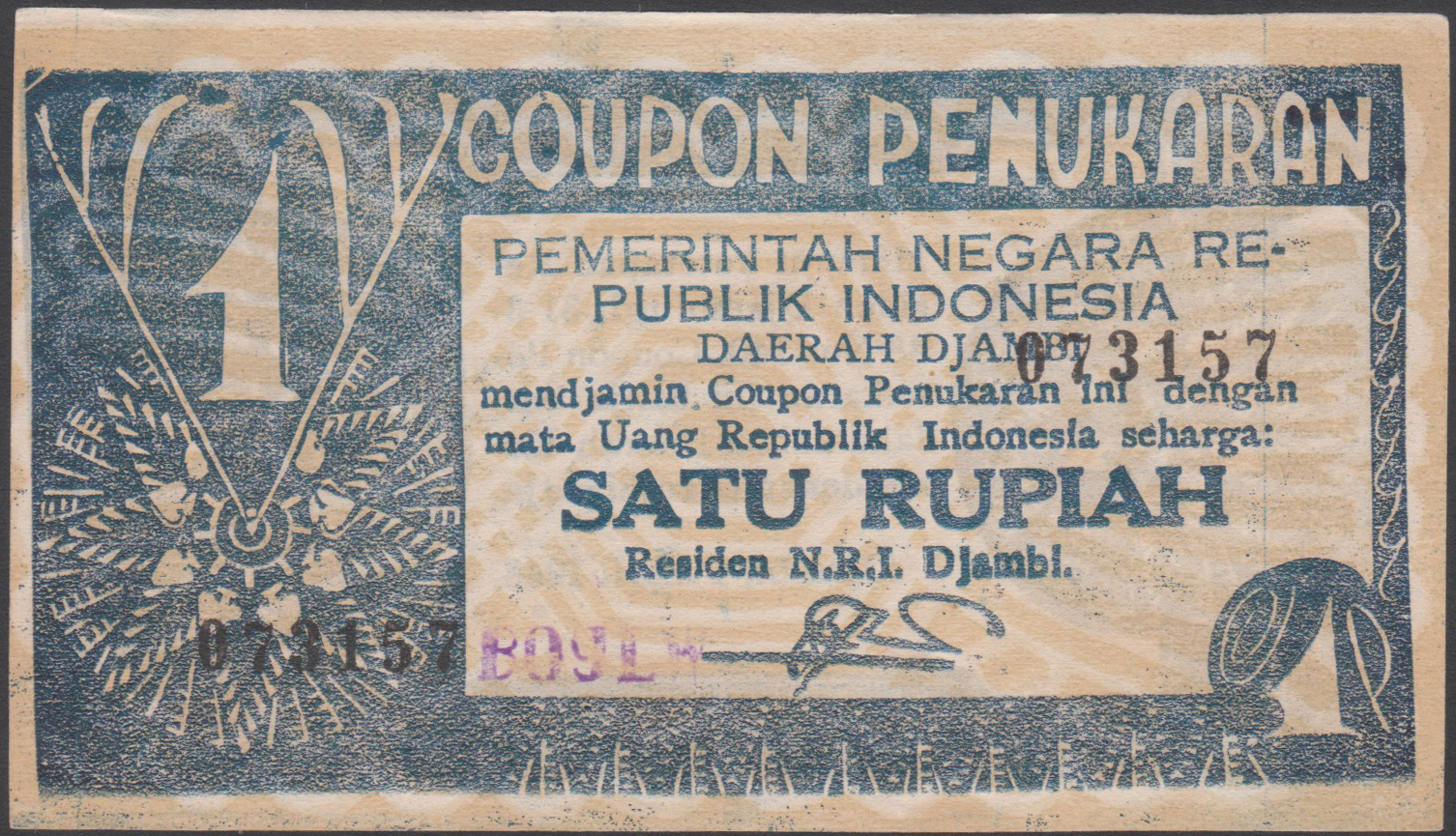
BOYLW (lowest observed number 058363)
CPXKU
2 ½ rupiah, 27 December 1947 (H-571)
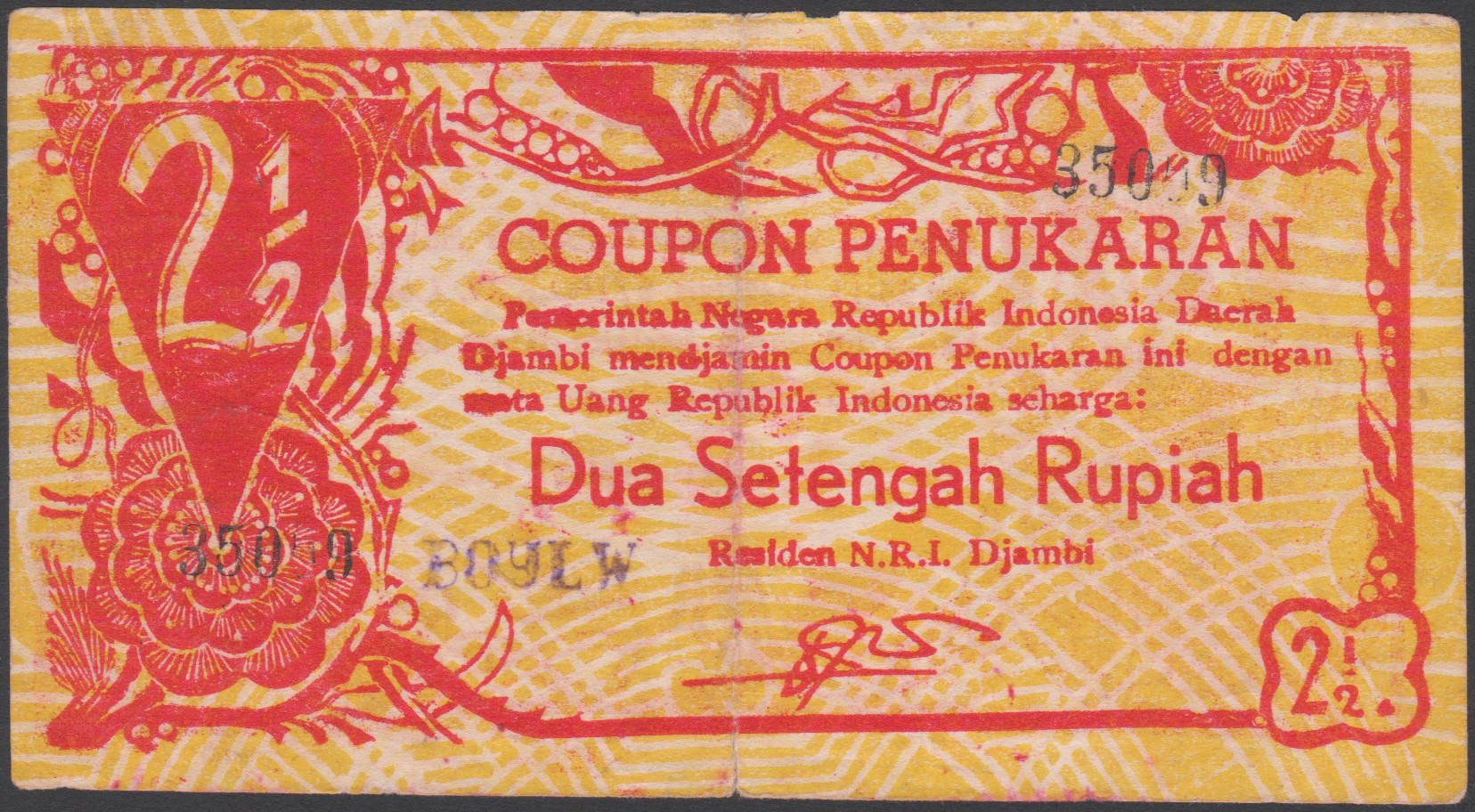
ANZMY (2)
BOYLW (2)
CPXKU (2)
DQWJS (2, 3)
ERVIQ ?
2 Numbers 5½ mm high: ANZMY, DQWJS
3 Numbers 5 mm high: BOYLW, CPXKU, DQWJS
2 ½ rupiah, 20 May 1948 (H-578)
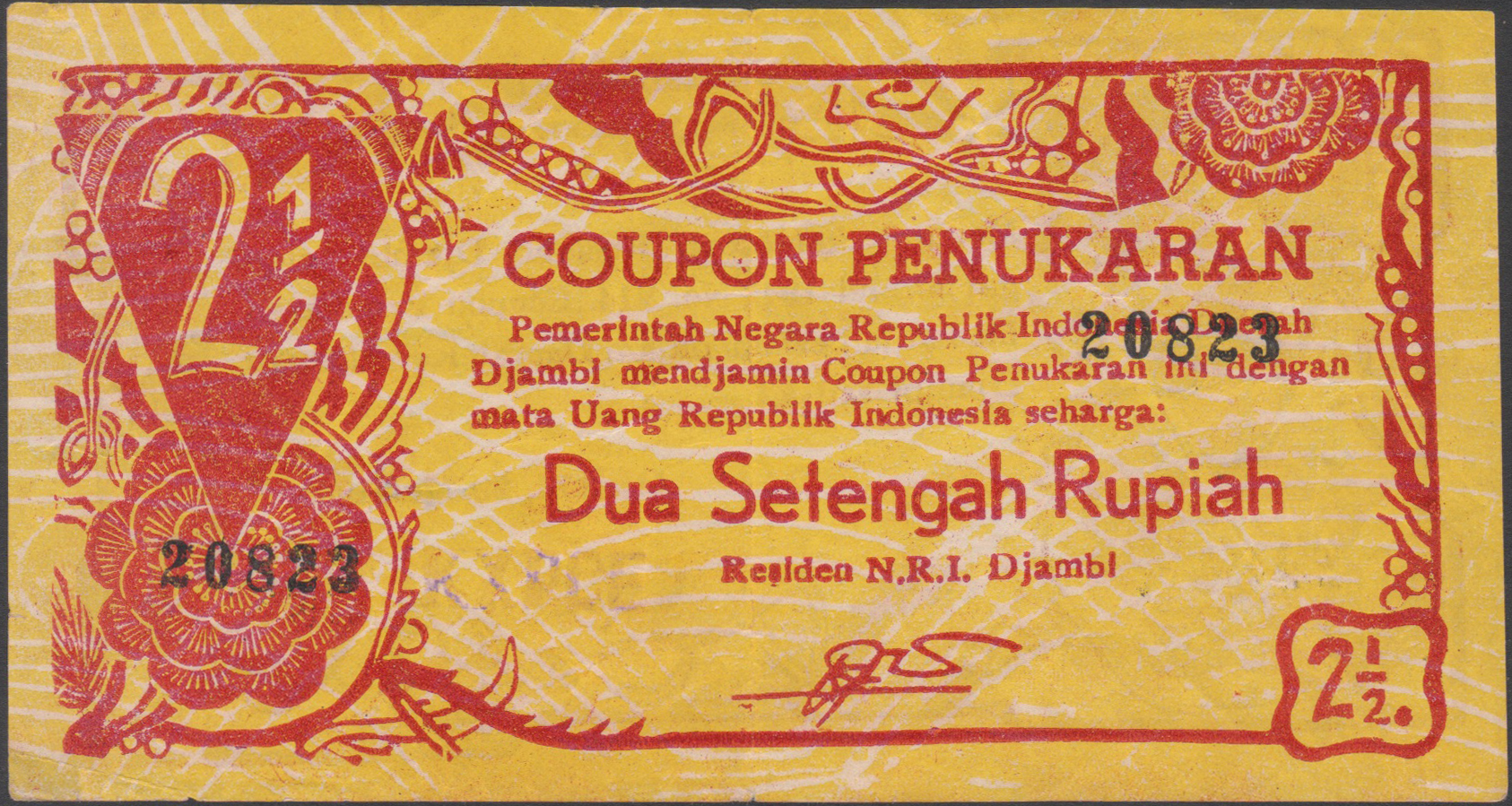
ERVIQ ?
FSUHO
GTTGM
HUSFK
IVREI
JWQDG
KXPCE
LYOBC
MZNAA (4)
4 There are large quantities of this combination available on the collectors market.
5 rupiah, 27 December 1947 (H-572)
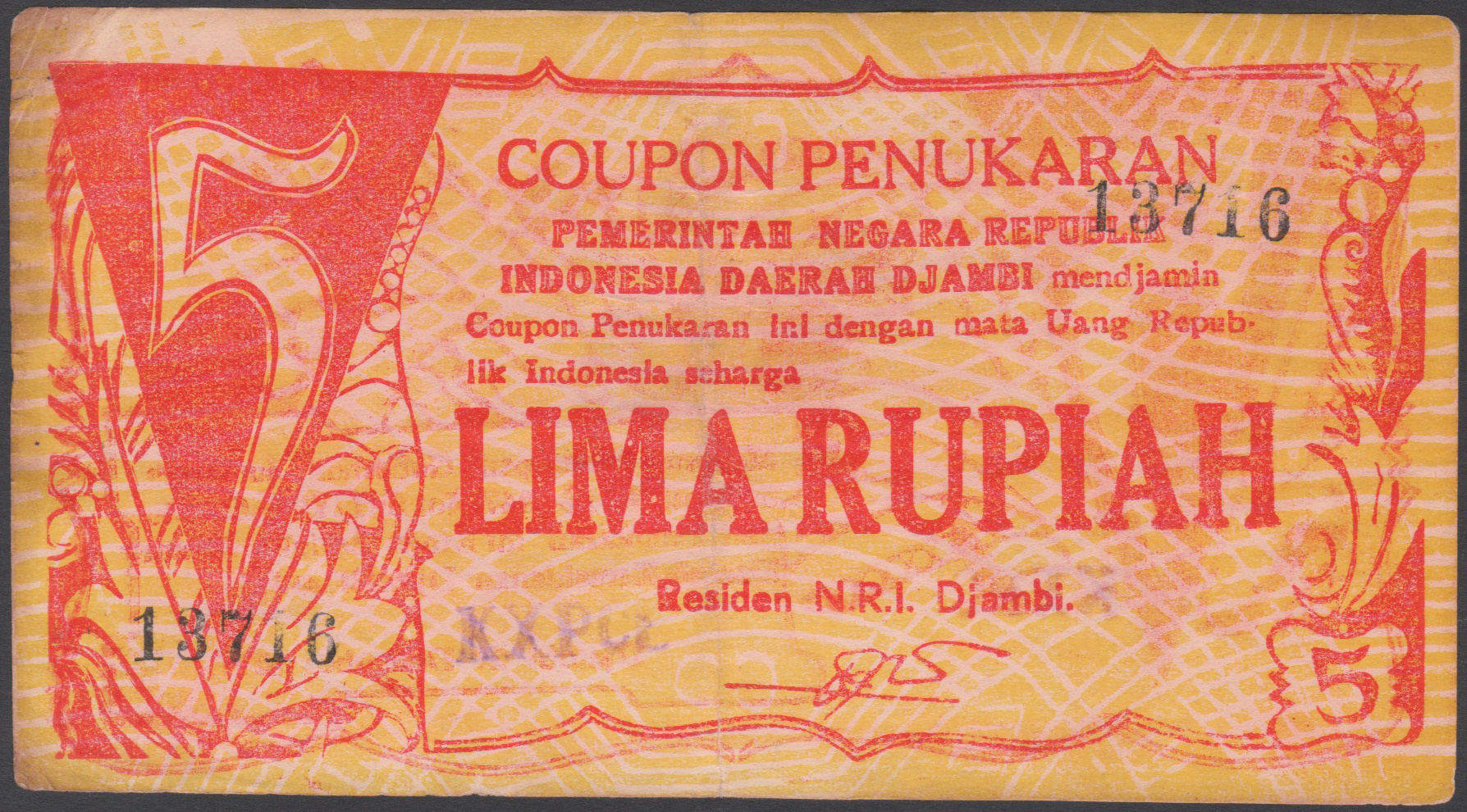
ANZMY (5)
BOYLW (6)
CPXKU (5)
DQWJS (6)
ERVIQ (6)
FSUHO (6)
GTTGM (5)
HUSFK
IVREI
JWQDG
KXPCE (5,6)
LYOBC (6)
5 Numbers 5½ mm high: ANZLMY, CPXKU, GTTGM, KXPCE
6 Numbers 5 mm high: BOYLW, DQWJS, ERVIQ, FSUHO, KXPCE, LYOBC
5 rupiah, 31 March 1948 (H-575)
This 5 rupiah note has two different types.
A. Text above the signature on the obverse: “Residen N.R.I. Djambi” (first type)
MZNAA
NAMZZ
OBLYX
PCKXV
QDJWT
REIVR
SFHUP
TGGTN
UHFSL
VIERJ
WJDQH
XKCPF (highest observed number 00355)
Fake: MWFSL
B. Text above the signature on the obverse: “RESIDEN N.R.I. DJAMBI” (second type)
5 letters:
XKCPF (lowest observed number 06459)
YLBOD
ZMANB
6 letters:
AbNZMY
BcOYLW
CdPXKU
5 rupiah, 20 May 1948 (H-579)
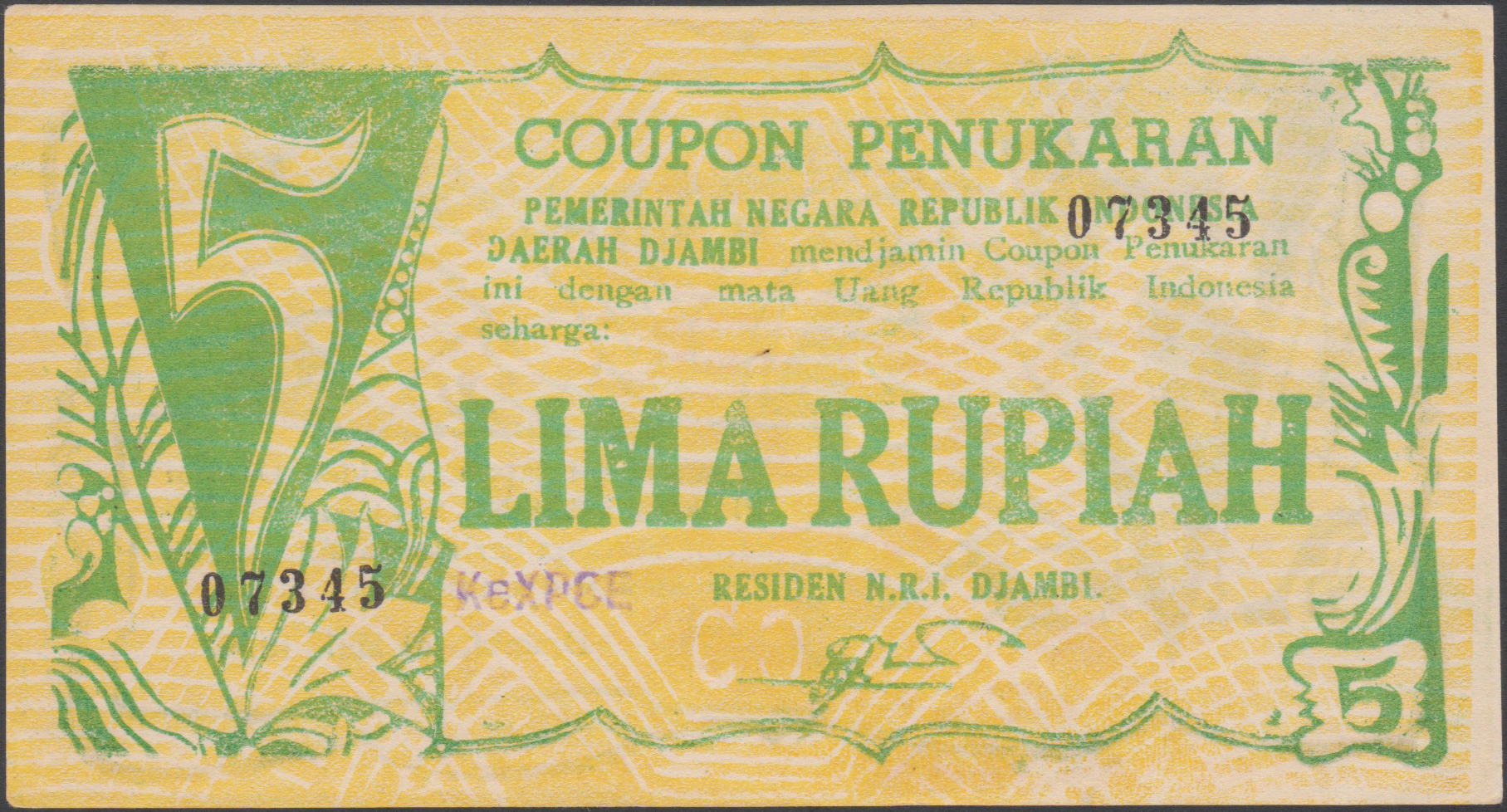
DeQWJS (7)
EfRVIQ
FgSUHO
GhTTGM
HiUSFK
IjVREI
JkWQDG
KeXPCE (8)
LmYOBC
MnZNAA
NoAMZZ
OpBLYX
PqCKXV
QrDJWT
RsEIVR
StFHUP
7 There are large quantities of this combination available on the collectors market.
8 KlXPCE is not observed, however KeXPCE is known. Possibly the letter ‘e’ is used to avoid confusion between the letter ‘l’ or the number ‘1’.
10 rupiah, 27 December 1947 (H-573)
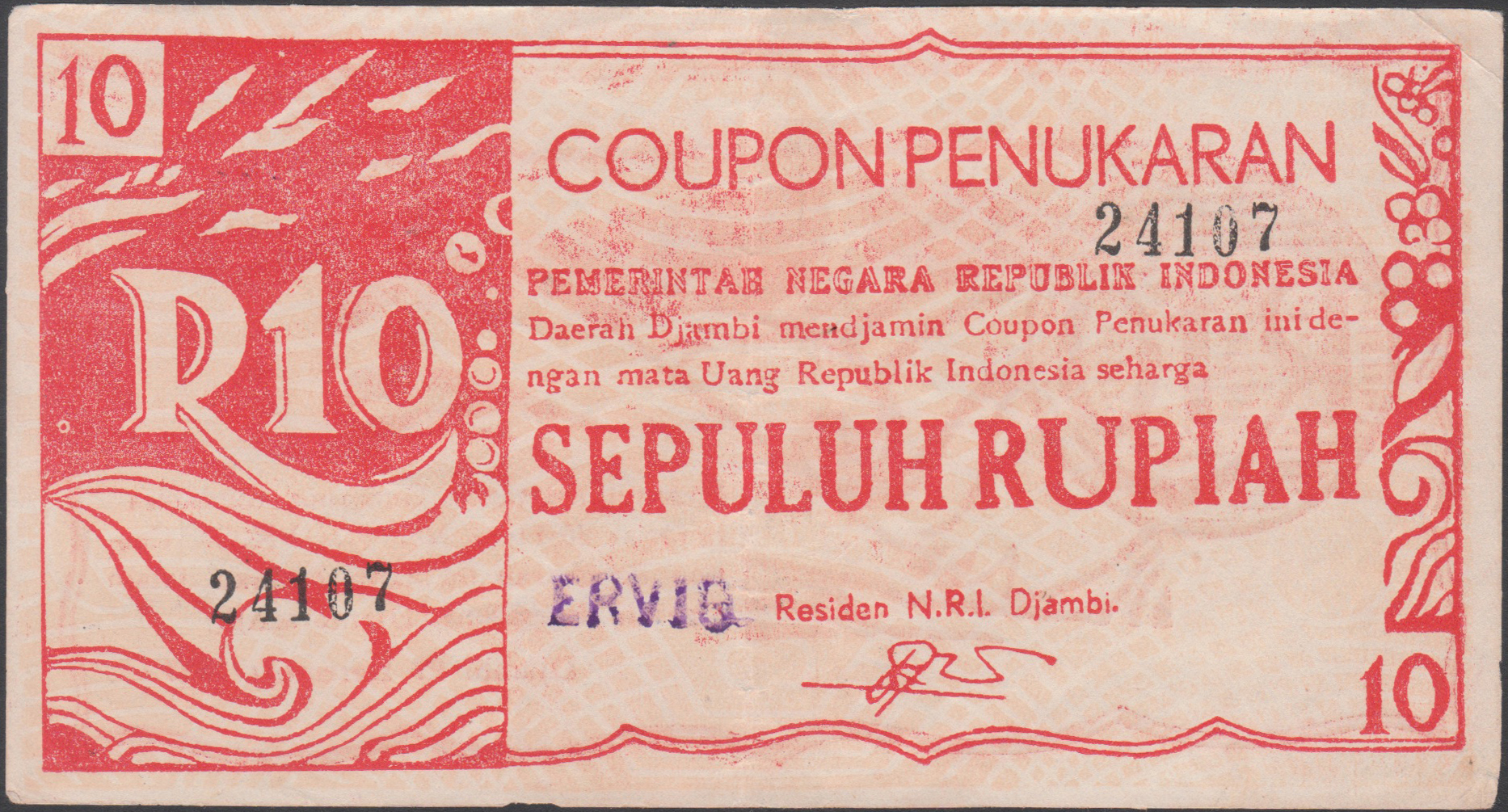
ANZMY
BOYLW
CPXKU
DQWJS
ERVIQ
FSUHO
GTTGM
HUSFK
IVREI
JWQDG
KXPCE
LYOBC
MZNAA
Fake: BOULW
10 rupiah, 31 March 1948 (H-576)
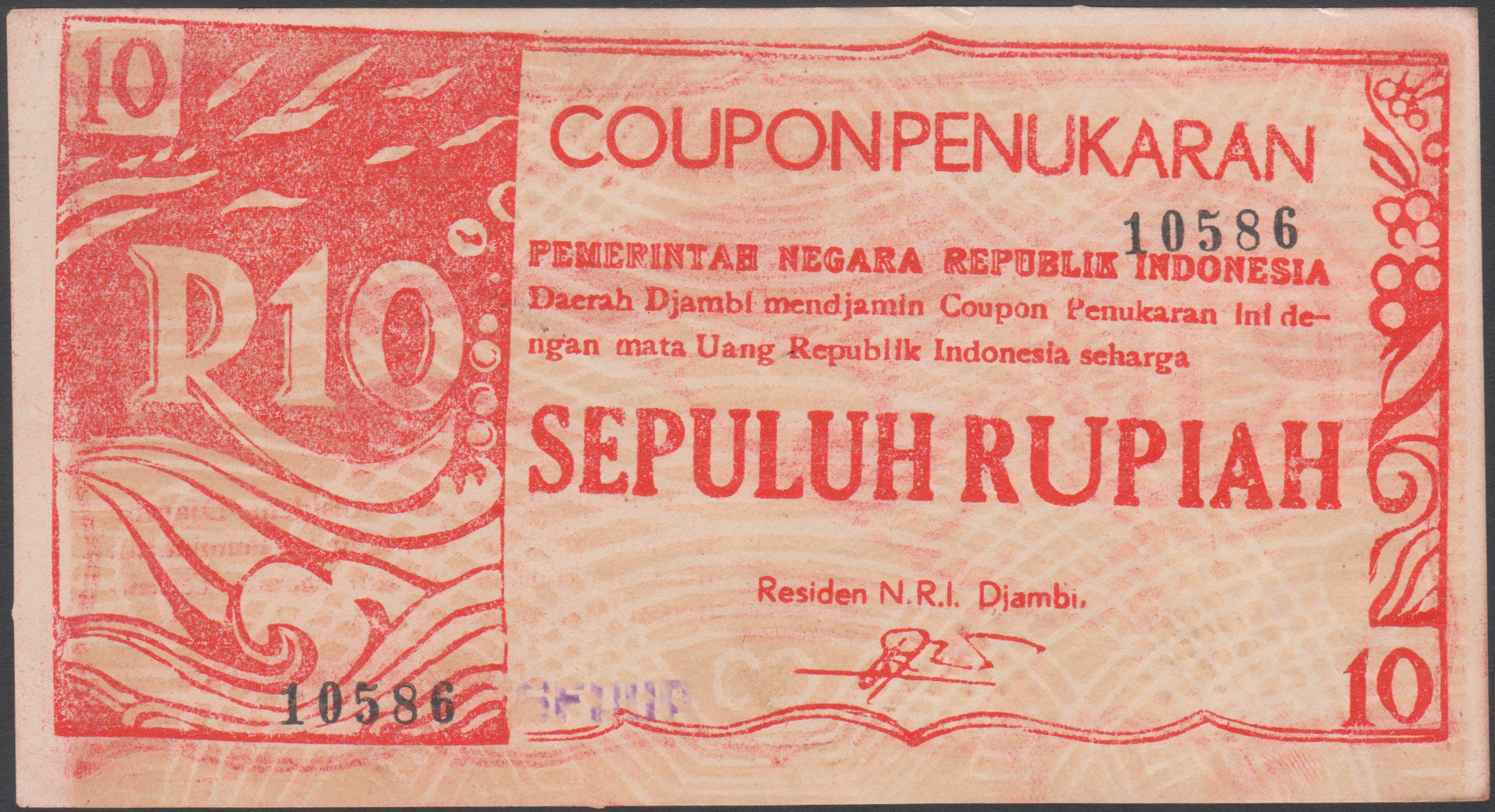
NAMZZ
OBLYX
PCKXV
QDJWT
REIVR
SFHUP (9)
9 There are large quantities of this combination available on the collectors market.
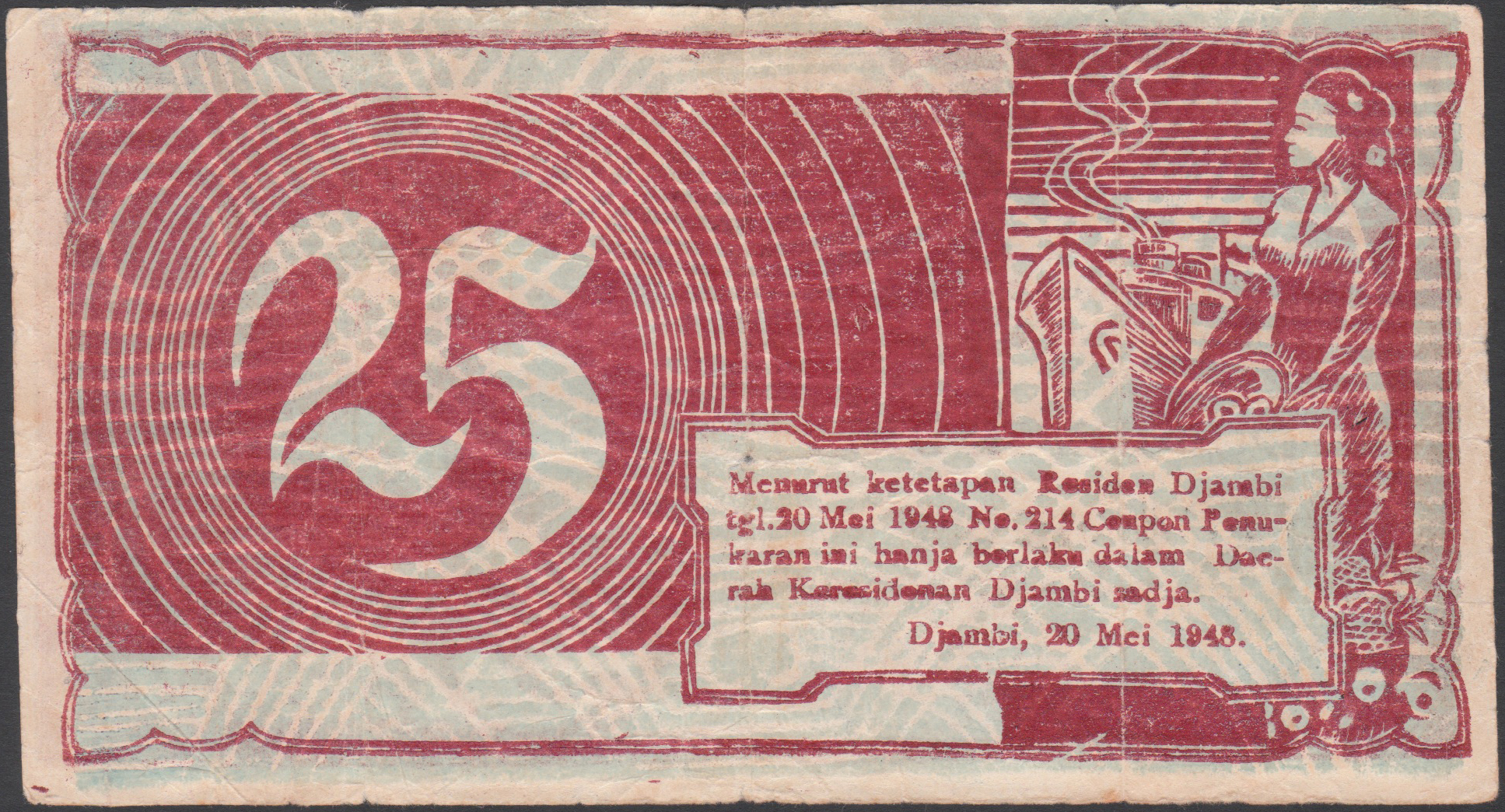
25 rupiah, 20 May 1948 (H-580)
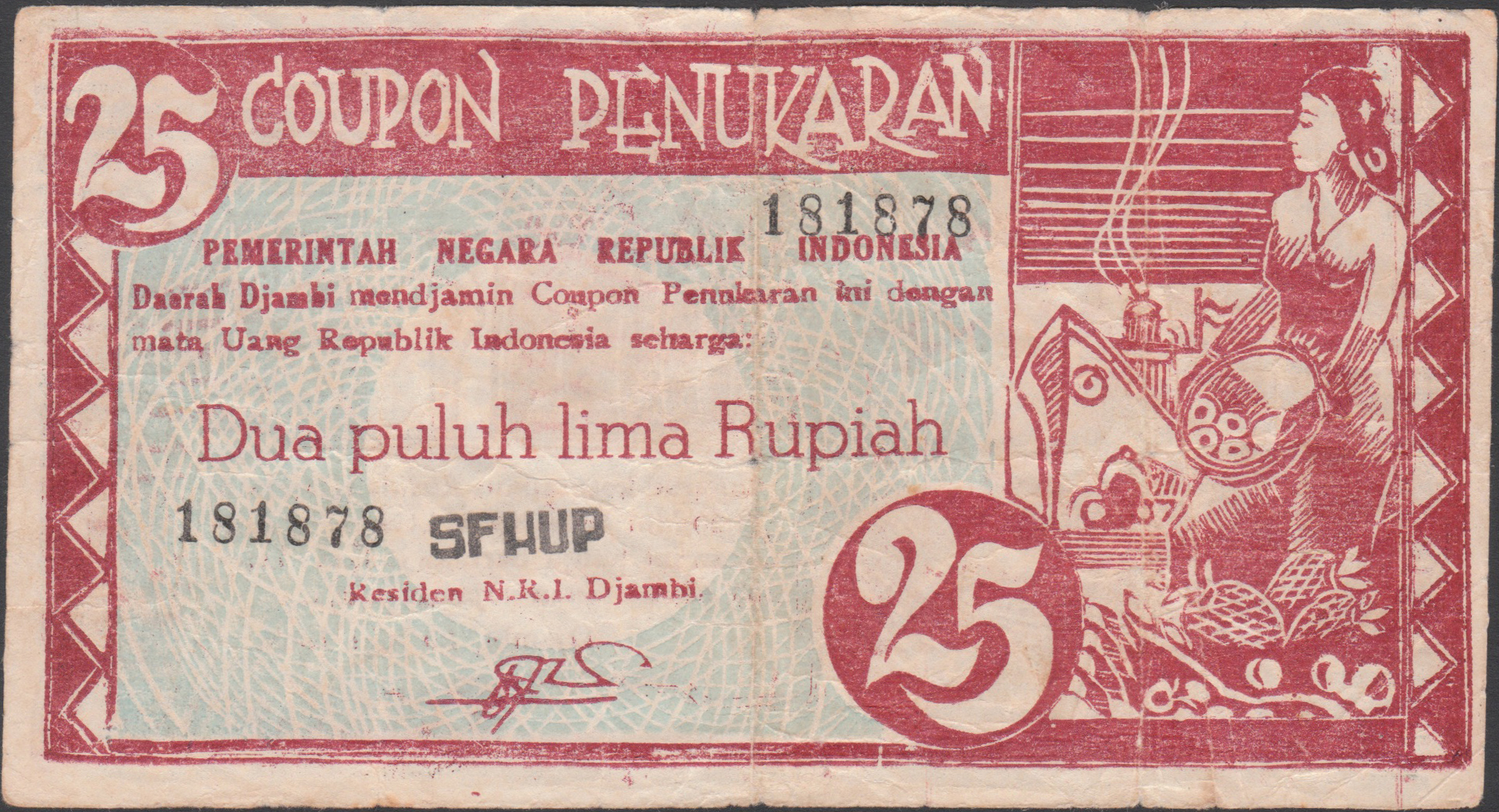
ANZMY (10)
BOYLW
CPXKU
DQWJS
ERVIQ
FSUHO
GTTGM
HUSFK
IVREI
JWQDG
KXPCE
LYOBC
MZNAA
NAMZZ
OBLYX
PCKXV
QDJWT
REIVR
SFHUP
TGGTN
10 There are large quantities of this combination available on the collectors market.
++++
The authors would appreciate to receive additional information. They can be reached via info@uang-kertas.com

Thursday, April 11, 2013

PHOTO JAMBI TAHUN 1910-AN 01


Vermoedelijk resident H.L.C. Petri van Djambi gekleed in slaapbroek met baadje Date Circa 1910
Europeaan (achter het paard), vermoedelijk met een groep Koeboes in Djambi Date Circa 1910
Detail van de gedecoreerde greep van een kris, Djambi. 1914/1921
Sultansgraven, Djambi. 1914/1921

 Kano op de Batang Hari te Kampoengbaroe bij Djambi Date 1911-07-16


Huis op de oever van de Batang Hari te Djambi Date 1911-07-18

Europees gezin met een beeld voor de woning, vermoedelijk in Djambi Date Circa 1910


Vermoedelijk resident H.L.C. Petri van Djambi (4e v.r.) aan tafel met bestuursambtenaren Date Circa 1910


Prauwen bij een aanlegstijger, vermoedelijk in Djambi Date Circa 1910


Vermoedelijk Koeboe vrouwen in Djambi Date Circa 1910

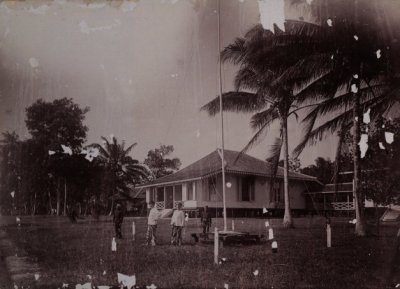
Europeaan op de veranda, vermoedelijk in Djambi Date Circa 1910

Interieur van een woonkamer, vermoedelijk in Djambi Date Circa 1910

De Karimata II aangemeerd, vermoedelijk in Djambi Date Circa 1910


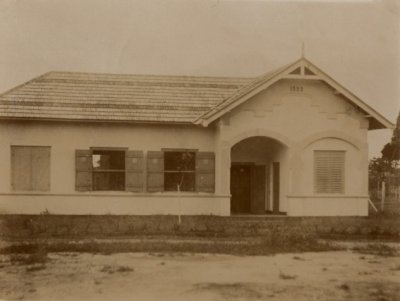
Europese woning met tuin, vermoedelijk in Djambi Date Circa 1910


Europeanen voor de woning, vermoedelijk in Djambi Date Circa 1910

Prauwen in een rivier, vermoedelijk in Djambi Date Circa 1910
Kintjir of waterschepwiel in Djambi, Sumatra (Date 1914-1921)
Maleise weefstoel, Djambi, Zuid Sumatra (Date 1900-1940


Djambi, een maraboe 1914-1921
Portret van een Indische militair, Djambi 1914/1926
Portret van een jonge Maleisische vrouw met rijststamper, Dajmbi. 1914-1921
Drie jonge Jambische bruiden 1914-1926
Portret van een jonge vrouw uit Djambi, met typische Djambise oorsieraden 1914-1921
Portret van een Kubu vrouw in de residentie Djambi 1914 and 1926
Landbouwgereedschappen en werktuigen van Koeboe's, Djambi, Sumatra 1914-1926
Stereonegatief. Ossenkar, Djambi, Zuid Sumatra 1900-1940
Botenligplaats, Djambi 1900-1940
Djambi paviljoen in het koloniaal Semarang tentoonstelling in 1914 1914
Djambi paviljoen op de koloniale tentoonstelling te Semarang 1914
Volksschool in Jambi, Zuid-Sumatra. (1915)
Schepen voor anker op de rivier Batang Hari in de stad Djambi. (1901-1912)
Moskee Djambi, 1900-1939
Ziekenhuisgebouw te Djambi 1910
 Drinkende herten uit een vijver, vermoedelijk in Djambi (Circa 1910)
 Sociëteit Concordia, vermoedelijk in Djambi (Circa 1910)
 Koeboe mannen, vermoedelijk in Djambi (Circa 1910)
 Man in Djambi (Circa 1910)
 Mannen in prauwen, vermoedelijk in Djambi (Circa 1910)


 Twee mannen, vermoedelijk in Djambi (Circa 1910)
Maleise weefstoel, Djambi, Zuid Sumatra (1900-1940)Overzetveer in Djambi (1915-1935)
Transport van Uzerhout, Djambi. (1912)
Straatgezicht te Djambi. (1912)
Linker Batang Hari Oever met vlot woningen te Djambi. (1912)
Kampong nabij Djambi. (1912)
Gewestelijk Vaartuig Djambi. (1912)
Ficus Elastica Djambi. (1912)
Drijvende Pasae Djambi. (1912)
Aanplant Hevea Brasiliensus nabij Djambi. (1912)
Aanlegsteiger en vlot te Djambi. (1912)
Aamiltapte Djiloetoengboom Djambi. (1912)
Geicht op de hoofdplaats Djambi. (1916)
Type van de Djambische kampong. (1916)
In het hartje van de Djambische binnenlanden. (1916)
Hekwieler Tek Ho Sen, volgeladen met rottan , juist vertrokken van Ma. Tembesi (naar Djambi). (1916)
Een petroleum-prospector in het binnenland van Djambi. (1916)
DE BOOM TER HOOFDPLAATS DJAMBI. (1916)
De Batang Hari voor Kota Djambi bij hoog water. Aan de overzijde woningen der anak-radjas. (1916)
In het hartje van de Djambische binnenlanden. (1916)
Veranda van een woning met daarachter andere woningen, vermoedelijk in Djambi (Circa 1910)
 Vermoedelijk Koeboes in Djambi (Circa 1910)
 Overdekte markt, vermoedelijk in Djambi (Circa 1910)

 Diverse gevlochten toedoengs, Djambi (Circa 1920)

 Paalwoningen, vermoedelijk in Djambi (Circa 1910)

 Vermoedelijk Koeboe man en vrouw in Djambi (Circa 1910)
 Rivier, vermoedelijk in Djambi (Circa 1910)

Interieur van een Europese woning, vermoedelijk in DjambiMet wandbeschilderingen (Circa 1910)
 Gezin bij de vlotwoning, vermoedelijk in Djambi (Circa 1910)
 Pad, vermoedelijk langs een landgoed in Djambi (Circa 1910)
 Europese woning met tuin, vermoedelijk in Djambi (Circa 1910)
Vermoedelijk een droogdok in Djambi (Circa 1910)
 Garnizoenswapenmagazijn in Djambi (1911-05-15)
Vermoedelijk Koeboe vrouwen in Djambi (Circa 1910)
 Vermoedelijk een baggermolen in de rivier in Djambi (Circa 1910)
Man, vermoedelijk in Djambi (Circa 1910)
Vermoedelijk een zwaar beladen Koeboe in Djambi (Circa 1910)
Mannen met een fiets op een pad, vermoedelijk in Djambi (Circa 1910)
Afscheid van, vermoedelijk, een officier van gezondheid van het Djambi Hospitaal te Djambi (Circa 1910)
Prauwen aan de aanlegsteiger, vermoedelijk in DjambiMet o.a. de roeboot Melawi (Circa 1910)
 Europese woning met tuin, vermoedelijk in Djambi (Circa 1910)
 Vlotwoningen in een rivier, vermoedelijk in Djambi (Circa 1910)
Prauwen aan de aanlegsteiger, vermoedelijk in Djambi Met o.a. de roeboot Melawi (Circa 1910)
Chinese tempel te Djambi (Circa 1915)
Twee dansende vrouwen, vermoedelijk in Djambi (Circa 1910)
Maleise weefstoel, Djambi, Zuid Sumatra (1900-1940)Overzetveer in Djambi (1915-1935)
Transport van Uzerhout, Djambi. (1912)
Straatgezicht te Djambi. (1912)
Linker Batang Hari Oever met vlot woningen te Djambi. (1912)
Kampong nabij Djambi. (1912)
Gewestelijk Vaartuig Djambi. (1912)
Ficus Elastica Djambi. (1912)
Drijvende Pasae Djambi. (1912)
Aanplant Hevea Brasiliensus nabij Djambi. (1912)
Aanlegsteiger en vlot te Djambi. (1912)
Aamiltapte Djiloetoengboom Djambi. (1912)
Geicht op de hoofdplaats Djambi. (1916)
Type van de Djambische kampong. (1916)
In het hartje van de Djambische binnenlanden. (1916)

In het hartje van de Djambische binnenlanden. (1916)
Hekwieler Tek Ho Sen, volgeladen met rottan , juist vertrokken van Ma. Tembesi (naar Djambi). (1916)
Een petroleum-prospector in het binnenland van Djambi. (1916)
DE BOOM TER HOOFDPLAATS DJAMBI. (1916)
De Batang Hari voor Kota Djambi bij hoog water. Aan de overzijde woningen der anak-radjas. (1916)
In het hartje van de Djambische binnenlanden. (1916)
Twee mannen, vermoedelijk in Djambi (Circa 1910)

In het hartje van de Djambische binnenlanden. (1916)
Vlotwoningen in een rivier, vermoedelijk in Djambi (Circa 1910)
Nieuwe weg in Djambi, Zuid-Sumatra (Circa 1910)